Hello in Morse Code: Complete Guide to Reading, Writing, and Sending It
You searched this website because you have either encountered Morse code in some form and have no clue what it means, or have been tasked with greeting someone without using your voice. You could simply be interested in learning how people used to communicate before telephones became popular. Whatever led you to this page, you are in luck.
At first glance, Morse code seems complex and confusing. It consists of dots, dashes, and no apparent order or letters from the English alphabet. Once you learn it on a letter-by-letter basis, however, it becomes simple pretty quickly. “Hello,” in particular, is a perfect choice to begin with since it includes five distinct characters.
Our Morse Code Translator will make it quick and easy. Type any word and get the code in seconds. But this guide goes further.
How Morse Code Timing Works
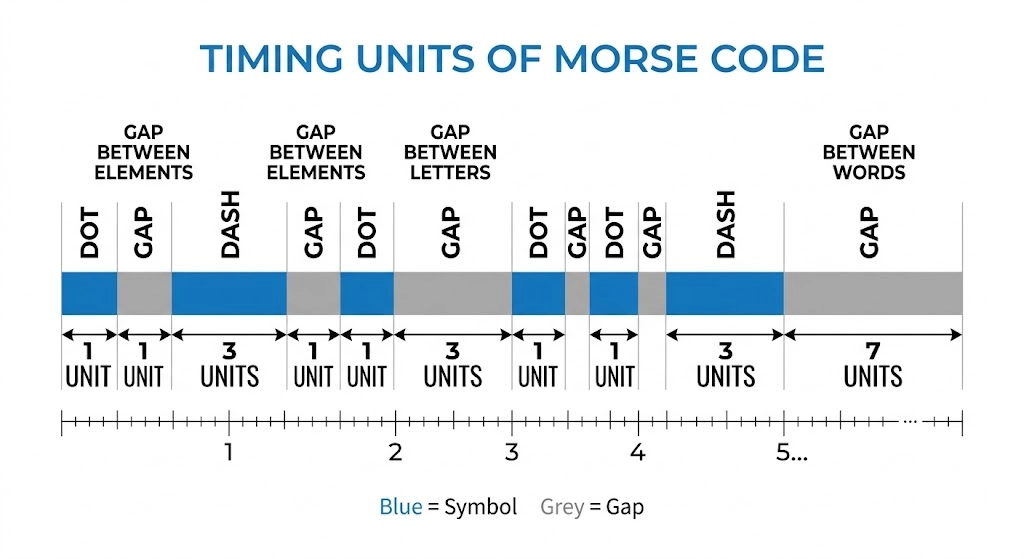
Before you try to send anything, you need to understand timing. Morse code is not just about the signals. It is about the spaces between them. Get the timing wrong, and your message becomes unreadable.
Dots, Dashes, and the Gaps Between Them
Every signal and every pause has a specific length, measured in units. One unit is your base timing. Everything else multiplies from there.
Signals:
- A dot lasts 1 unit
- A dash lasts 3 units
Gaps:
- Gap between dots and dashes within the same letter: 1 unit
- Gap between letters: 3 units
- Gap between words: 7 units
Thus, each time you type an H (dots-four), there will be a 1-second pause between each dot. Each time you stop at H and continue with E, there will be a pause of 3 seconds. At the end of your signal, after you have transmitted hello, the pause will be 7 seconds.
Why Timing Makes or Breaks Your Signal
Most beginners make their mistakes here. While they do manage to learn how to make the dots and dashes correctly, they do not maintain any pauses between them. What results is a garbled message which cannot be understood.
It’s just like spoken language: if you speak without pauses between words, no one can understand what you’re saying.
Start slow. Use a metronome if you have one. Tap on a table and count the units in your head. Speed comes later. Clarity comes first.
Complete Morse Code Alphabet Chart (A to Z)
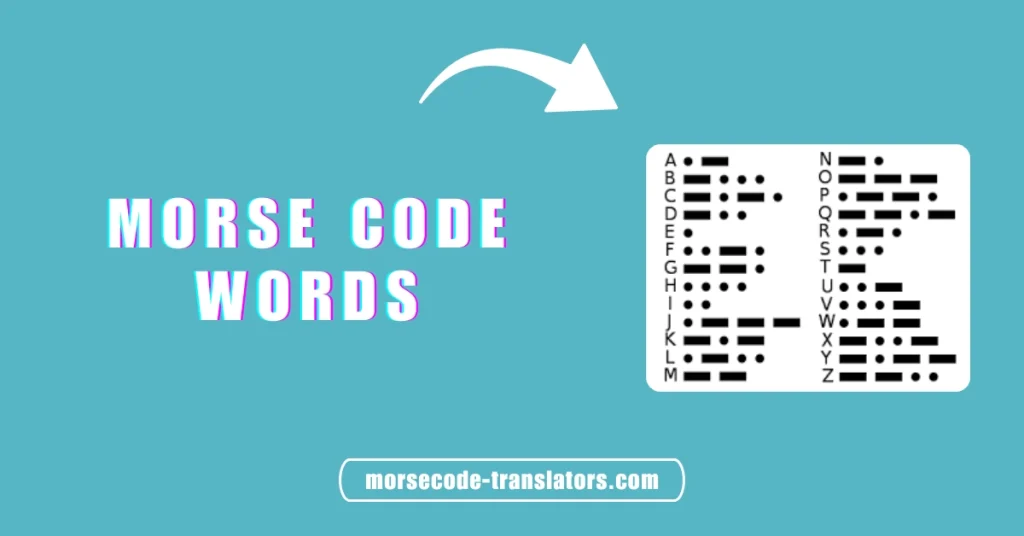
Here is the full alphabet in Morse code. Every letter from A to Z, its Morse code sequence, the spoken rhythm used by radio operators, and a quick memory cue to help it stick.
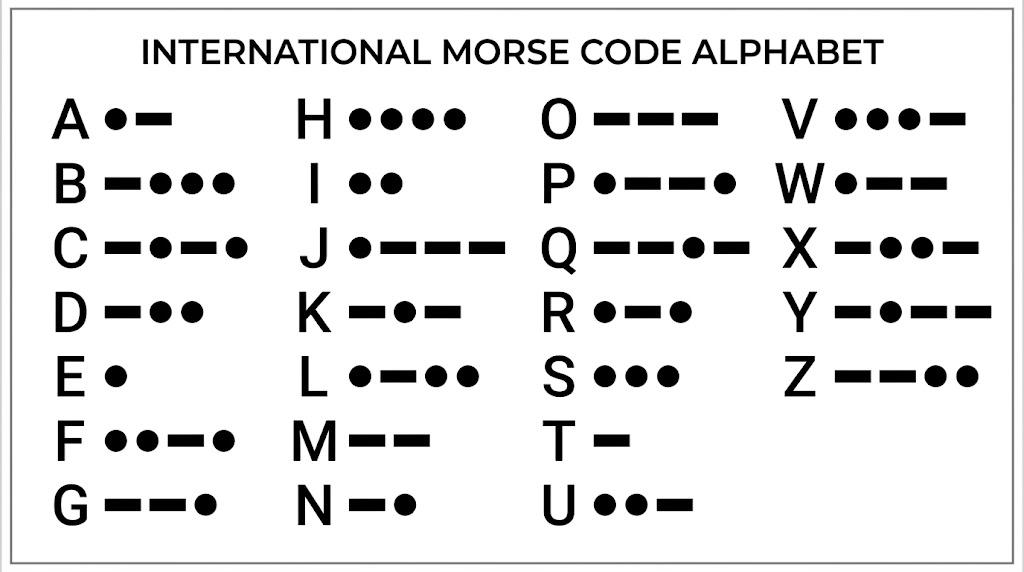
Letter | Morse Code | Spoken Rhythm | Memory Cue |
A | • — | dit-dah | “A-way” |
B | — • • • | dah-dit-dit-dit | “Back to basics” |
C | — • — • | dah-dit-dah-dit | “Come and go” |
D | — • • | dah-dit-dit | “Down below” |
E | • | dit | Shortest letter, most common |
F | • • — • | dit-dit-dah-dit | “Find your way” |
G | — — • | dah-dah-dit | “Go, go stop” |
H | • • • • | dit-dit-dit-dit | Four quick taps |
I | • • | dit-dit | Two fast dots |
J | • — — — | dit-dah-dah-dah | “Just long long long” |
K | — • — | dah-dit-dah | “Kay, okay” |
L | • — • • | dit-dah-dit-dit | “a LONG little” |
M | — — | dah-dah | Two slow beats |
N | — • | dah-dit | “No dot” |
O | — — — | dah-dah-dah | Three long beats |
P | • — — • | dit-dah-dah-dit | “Pop and drop” |
Q | — — • — | dah-dah-dit-dah | “Queen bee Queen” |
R | • — • | dit-dah-dit | “a Round trip” |
S | • • • | dit-dit-dit | Three quick dots |
T | — | dah | One long beat |
U | • • — | dit-dit-dah | “Up up long” |
V | • • • — | dit-dit-dit-dah | Three dots then long |
W | • — — | dit-dah-dah | “Wait long, long” |
X | — • • — | dah-dit-dit-dah | “X marks both ends” |
Y | — • — — | dah-dit-dah-dah | “You wait, you wait” |
Z | — — • • | dah-dah-dit-dit | “Zoo zoo quick quick” |
Save this chart. Print it. Keep it somewhere visible while you practice.
Master the building blocks of every transmission by exploring our complete guide to the Morse Code Alphabet A to Z.
How to Learn the Morse Code Alphabet Step by Step
Learning the full alphabet in Morse code feels overwhelming when you look at all 26 letters at once. It is not. Break it down, and it becomes very manageable.
Start With the Six Most Common Letters
Do not start with A and work through Z in order. That is the slow way. Start with the letters that appear most in English text: E, T, A, N, I, S. These six cover a huge percentage of everyday words, and they all have short, simple codes.
E is one dot. T is one dash. You already know two letters. Keep going.
Group Letters by Pattern Length
Once you have the basics, organise the rest by how many signals they use. Your brain learns patterns in groups much faster than it learns random sequences.
1 signal: E (•), T (—)
2 signals: A (• —), I (• •), M (— —), N (— •)
3 signals: S (• • •), U (• • —), R (• — •), W (• — —), D (— • •), K (— • —), G (— — •), O (— — —)
4 signals: H (• • • •), V (• • • —), F (• • — •), L (• — • •), P (• — — •), J (• — — —), B (— • • •), X (— • • —), C (— • — •), Y (— • — —), Z (— — • •), Q (— — • —)
Work through one group at a time. Master it before moving to the next.
Move From Letters to Short Words
Once letters feel comfortable, start building words. Start with SOS (• • • — — — • • •). Then try HI (• • • • • •). Then OK (— — — — • —). Short words build confidence fast and give you something real to decode.
This is also where how to learn Morse code practice comes in. Decoding real words is completely different from staring at a chart. Your brain starts connecting rhythm to meaning instead of rhythm to symbol.
Use a Translator for Daily Practice
A Morse Code Translator does two things well. It converts your text into Morse so you can study the patterns. It also plays the audio so you hear the actual dit-dah rhythm. Spend ten minutes a day typing words into the translator and listening back. You will be surprised how quickly your ear starts recognising letters before your brain consciously works them out.
Did you know numbers follow a distinct, five-symbol pattern? Learn how to count with our guide on Morse Code Numbers.
Four Ways to Send Hello in Morse Code
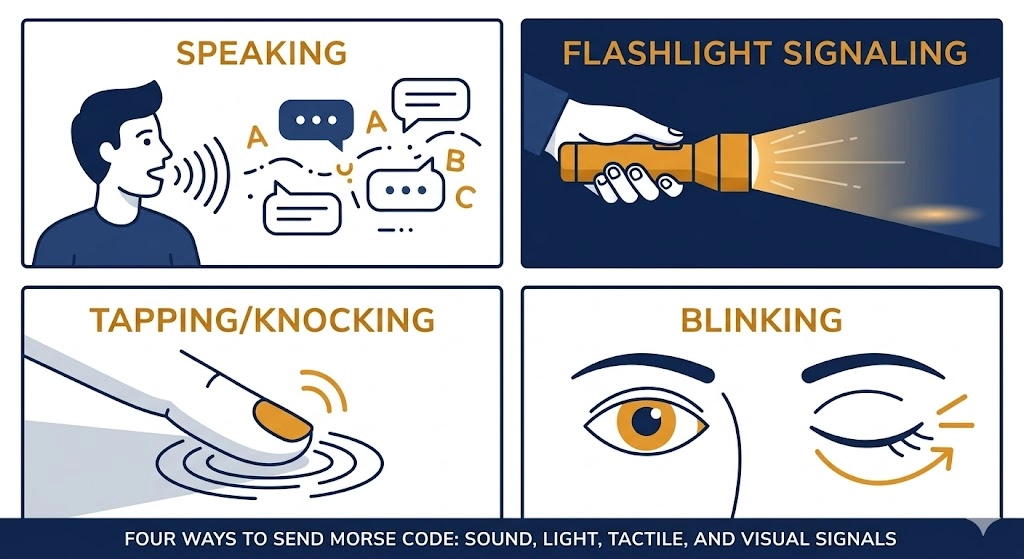
Once you know the code and the timing, you can send it through almost anything. Sound, light, touch, even your eyes. Each method works on the same principle: a short signal for a dot, a long signal for a dash.
Using Sound (Dit and Dah Method)
This is the classic way. You use your voice or a buzzer to produce short and long sounds.
To say hello out loud in Morse code:
- H: say “dit-dit-dit-dit”
- E: say “dit”
- L: say “dit-dah-dit-dit”
- L: say “dit-dah-dit-dit”
- O: say “dah-dah-dah”
Full spoken sequence: dit-dit-dit-dit / dit / dit-dah-dit-dit / dit-dah-dit-dit / dah-dah-dah
Keep the dah sounds noticeably longer than the dit sounds. That contrast is what makes the code readable to a listener. You can also use a buzzer, a horn, or any device that produces a sound you can control in length.
Radio operators have used this exact method for over 150 years. It is still in use today in amateur radio communities worldwide.
Using a Flashlight
Hello in Morse code with a flashlight works perfectly in low-light situations, outdoor signalling, or anywhere sound is not practical.
- Short flash for a dot
- Long flash for a dash
- Pause the light between letters
To flash hello:
- H: four short flashes
- E: one short flash
- L: short, long, short, short
- L: repeat
- O: three long flashes
Tips for clean flashlight signalling:
- Make your long flashes at least three times longer than your short ones
- Keep a clear pause between each letter so the receiver can distinguish them
- Practice on a wall in a dark room before using it in the field
This method is practical in survival situations, camping, or even just for fun with friends across the street at night.
Tapping on a Surface
Tapping is one of the oldest methods and arguably the most accessible. You need nothing except your finger and a hard surface.
- Short tap for a dot
- Long-press for a dash
- Natural pause between letters
To tap hello:
- H: four quick taps
- E: one tap
- L: tap, long press, tap, tap
- L: repeat
- O: three long presses
Common tapping mistakes:
- Rushing through letters without pausing
- Making dashes only slightly longer than dots (the difference should be obvious)
- Losing the 7-unit word gap and running words together
Tapping works through walls, pipes, floors, and almost any solid surface. It has real historical use in military and emergency contexts where voice communication was impossible.
Blinking With Your Eyes
This is the most unusual method and the most impressive one to pull off. You blink short for a dot and hold your eyes closed longer for a dash.
To blink hello:
- H: four quick blinks
- E: one blink
- L: short blink, long close, short blink, short blink
- L: repeat
- O: three long eyes close
This method was used by people who were unable to speak or move. It requires a patient receiver who knows Morse code well enough to follow along in real time. It is slow, but it works.
How to Read and Translate Morse Code
Reading Morse code is a different skill from sending it. When you are reading, you are decoding signals in real time and matching them against the patterns you have memorised. That takes practice, but it builds fast.
Using a Morse Code Translator Online
The fastest way to start is with a Morse Code Translator. You type text and get Morse code instantly, or paste Morse code and get the translation back. It is useful for:
- Checking your manually written code for errors
- Learning what unfamiliar sequences mean
- Practising with real output before you try live transmission
Use it as a training tool, not a crutch. The goal is to eventually read common patterns without needing to look them up.
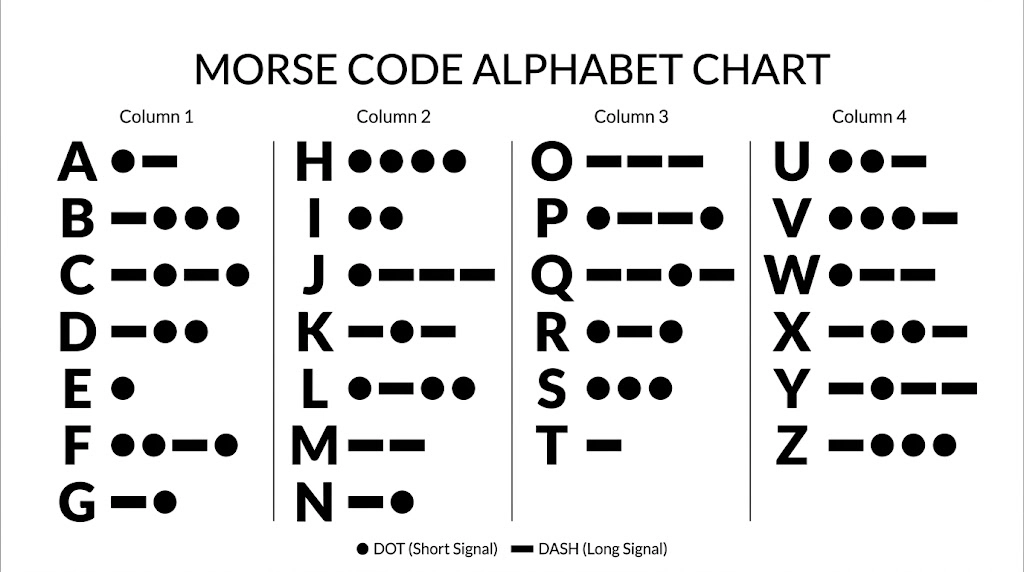
Reading a Morse Code Alphabet Chart
A Morse code alphabet chart maps every letter and number to its dot and dash pattern. Keep one nearby when you are learning. Over time, you will stop needing it for common letters.
The letters you will see most often in greetings and common words are E, T, A, I, N, S, H, O, and R. Learn those first. They cover most of what you will encounter.
Building Manual Decoding Skills
The real skill is in your ear or your eye, not on a screen. To build it:
- Listen to Morse code audio recordings and try to decode each letter before looking up the answer
- Write down what you hear in real time, even if you miss signals at first
- Start at very slow speeds and increase gradually
- Focus on whole words rather than individual letters once you get comfortable
Many people find that learning Morse Code words as complete units is faster than building letter by letter. Your brain starts recognising the rhythm of familiar words the same way it recognises spoken words.
How to Write Hello in Morse Code by Hand
Writing Morse code is a skill that feels almost like learning a second alphabet. Once you memorise the patterns, you can jot down any message on paper, and someone who knows Morse can read it back.
Dot and Dash Notation Rules
When writing Morse code by hand, a few simple rules keep it readable:
- Use a small filled circle or a short line for a dot
- Use a longer horizontal line for a dash
- Leave a small space between signals in the same letter
- Leave a slightly larger space between letters
- Use a forward slash or a larger gap to separate words
Written hello looks like: …. . .-.. .-.. —
Each letter group should be visually distinct. If your spacing is sloppy, the letters blur together, and the reader loses track of where one ends and the next begins.
Common Writing Mistakes to Avoid
- Making dots and dashes the same size
- Forgetting spaces between letters
- Writing the slash too small to notice as a word gap
- Mixing up L (.-.. ) with F (..-. ) because they share similar patterns
Practice by writing out short words first. Hello is a good one to start with because it has enough variety to test your notation without being too long. Then move on to full sentences once you feel comfortable.
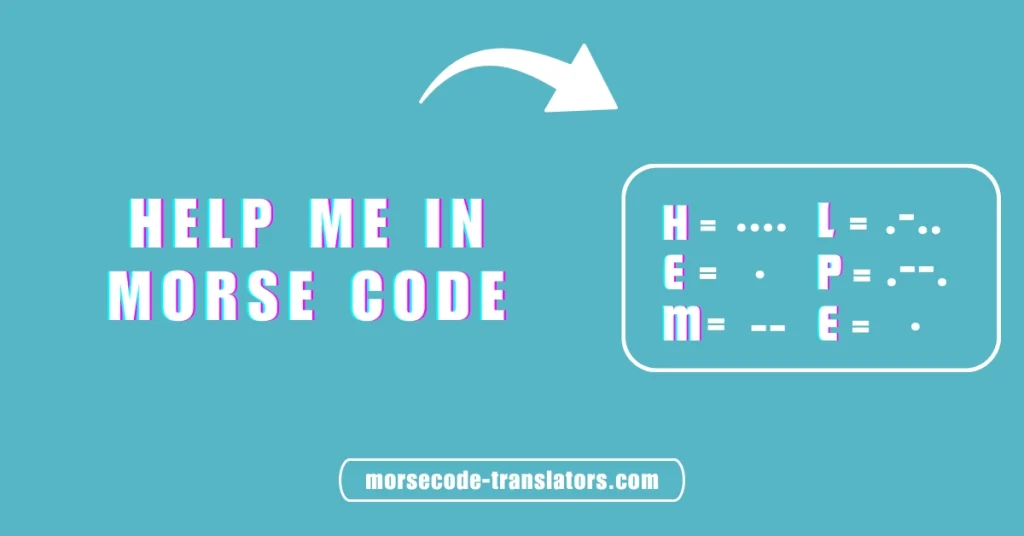
Hello World in Morse Code
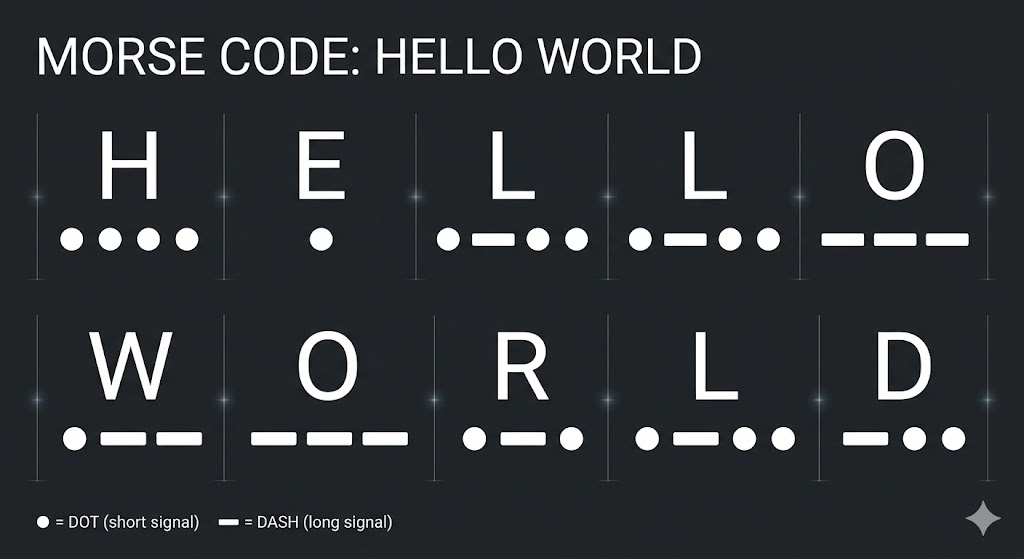
If you have ever learned programming, you know “Hello, World!” is the first thing you type. In Morse code, the full phrase looks like this:
…. . .-.. .-.. — / .– — .-. .-.. -..
That slash represents the 7-unit word gap between “hello” and “world.”
Here is the breakdown of “world”:
Letter | Morse Code |
W | .– |
O | — |
R | .-. |
L | .-.. |
D | -.. |
The full phrase contains 30 signals across 10 letters. It is a solid practice sequence because it covers a wide range of Morse patterns without getting overwhelming.
Why does this phrase matter beyond programming? Because “Hello, World” represents a first contact. In Morse code, it carries that same meaning. It is the phrase operators once used to test new equipment and new connections. Sending it cleanly meant everything was working. That tradition carries real weight in communication history.
What to Learn After Hello
Hello is your starting point, not your destination. Once you can read and send it reliably, the rest of Morse code opens up quickly.
Progressing to Morse Code Words and Full Sentences
Short words build your foundation. After saying hello, try some basic words such as yes, no, help, and ok. These words add more combinations of letters without becoming too difficult for you.
After getting comfortable with individual words, combine them into two or three words each time. Maintain the rhythm as well as the 7-second pause between them. Writing sentences may seem intimidating, but they are merely sentences made up of words.
Tackling SOS in Morse Code and Emergency Signals
The SOS signal is one of the most recognisable signals throughout the world. It consists of three dots, three dashes, and three more dots:…—…
There is no actual meaning or phrase that the SOS represents. The signal was specifically picked since it is completely unique and cannot be confused with anything else.
Knowing Morse code is not only interesting but a helpful tool when you find yourself in an emergency. When you are required to use your whistle or flashlight as a signal to attract attention, you know what signal to use.
Sending I Love You in Morse Code and Personal Messages
Now that you are able to use the greetings and Morse code signals during emergencies, the next obvious thing to do is to move on to personal messages. The most common message people learn in Morse code is “I love you.” This not only allows you to practice more complicated code, but it is also an important message.
Practice sending out short messages to people who know how to decode Morse code; otherwise, this will remain just another tedious task.
You could also look at International Morse code conventions in order to find out what else there is about Morse codes.
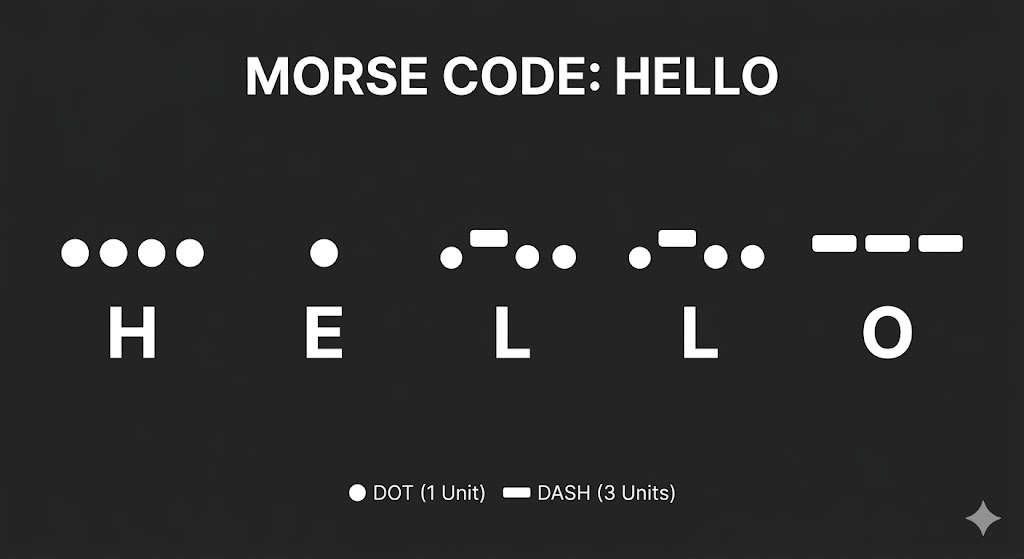
What Is Hello in Morse Code?
The Morse code for hello is: …. . .-.. .-.. —
That’s it. Five dots and dashes, each with its own individual pattern. When reading Morse code, you would do so left to right as you would in normal English text. The difference between each letter would be defined by short spaces between each symbol.
Letter by Letter Breakdown
Here is exactly how each letter in “hello” translates:
Letter | Morse Code | Spoken Sound | Signal Count |
|---|---|---|---|
H | …. | dit-dit-dit-dit | 4 dots |
E | . | dit | 1 dot |
L | .-.. | dit-dah-dit-dit | 1 dot, 1 dash, 2 dots |
L | .-.. | dit-dah-dit-dit | 1 dot, 1 dash, 2 dots |
O | — | dah-dah-dah | 3 dashes |
- H is four quick dots.
- E is just one dot, the shortest letter in Morse code.
- L has a specific rhythm with a dash in the middle.
- O is three long dashes in a row.
- Put them together and you get a 16-signal sequence that sounds like: dit-dit-dit-dit / dit / dit-dah-dit-dit / dit-dah-dit-dit / dah-dah-dah.
That slash just represents the pause between letters. In real transmission, those pauses carry as much meaning as the signals themselves.
What Is Hi in Morse Code?
Hi is much shorter. The Morse code for hi is: …. ..
H stays the same at four dots. I is just two dots. So hi in Morse code is six dots total with a pause between the two letters. It is one of the fastest greetings you can send.
Hello vs Hi: Key Differences in Length and Complexity
Word | Morse Code | Total Signals | Complexity |
Hi | …. .. | 6 | Very simple |
Hello | …. . .-.. .-.. — | 16 | Moderate |
Hi is a beginner-level word. Hello is the better learning tool because it forces you to work with dots only, mixed patterns, and dashes only, all in one word. That variety builds your rhythm faster than any single-pattern word could.
Frequently Asked Questions
How do you say hello in Morse code?
Hello in Morse code is …. . .-.. .-.. — . Each letter has its own pattern. H is four dots, E is one dot, L is dot dash dot dot, and O is three dashes.
What is hi in Morse code?
Hi, in Morse code, is …. .. . H is four dots, and I is two dots. It is much shorter than hello, with only six total signals and no dashes at all.
What is Hello World in Morse code?
Hello world in Morse code is …. . .-.. .-.. — / .– — .-. .-.. -.. . The slash marks the word gap between hello and world. The full sequence has 30 signals across 10 letters.
Can Morse code be sent without sound?
Yes. You can send Morse code through light, tapping, blinking, or any method that allows you to produce short and long signals. The meaning stays the same regardless of the method.
How do you write hello in Morse code by hand?
Write dots as small circles or short marks and dashes as longer horizontal lines. Leave small gaps between signals within a letter and larger gaps between letters. Written hello looks like …. . .-.. .-.. —
Is Morse code the same in every language?
The International Morse Code standard covers the Latin alphabet and Arabic numerals with the same patterns globally. Some extended versions exist for other scripts, but the core alphabet used for English is universal.
What should I learn after hello in Morse code?
Start with other short common words, then move to emergency signals like SOS in Morse Code, and then work toward full sentences. Use a Morse Code Translator to check your work and a Morse Code Alphabet chart to build your memory.