Morse Code Alphabet A to Z: Full Chart & Guide
You searched for this because dots and dashes make zero sense at first glance. Maybe you saw • • • — — — • • • somewhere and had no idea what it meant. Maybe you want to learn Morse code, but have no clue where to begin. Or you just need a reliable chart that shows every letter clearly without making your head spin.
You are in the right place.
This guide covers the complete Morse code alphabet from A to Z, how the system actually works, how to read it, memorise it, and practice it without getting bored or overwhelmed. Everything is laid out in plain language so anyone can follow along, whether you are a total beginner or someone who picked up a few letters and got stuck.
Use our Morse Code Translator to test everything you learn as you go through this guide.
What Is the Morse Code Alphabet?
The Morse code alphabet is a system where every letter, number, and punctuation mark gets a unique combination of short and long signals. Short signals are called dots. Long signals are called dashes. Put them in the right order, and you have a letter. String letters together and you have a word.
That is the whole idea. Simple at the core, but deeply effective.
Samuel Morse gets most of the credit, but Alfred Vail is the person who actually made the alphabet practical. Vail figured out something clever. He counted how often each letter appeared in printed English text and assigned shorter codes to the most common ones. E gets just one dot. T gets one dash. The letters you use most take the least effort to send.
This is not random. It is engineered efficiency.
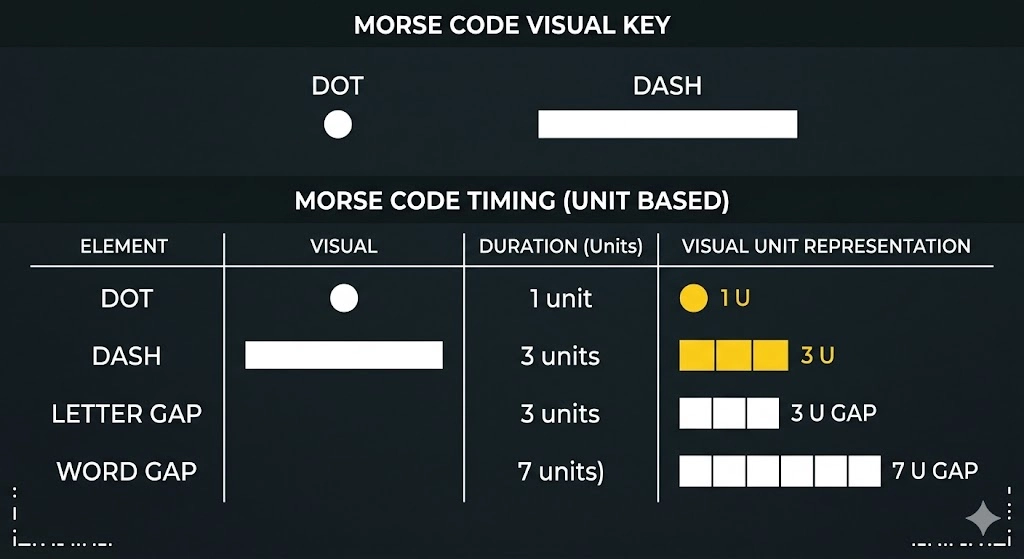
The system runs on timing. A dot is one unit of time. A dash is three units. The gap between signals inside one letter is one unit. The gap between letters is three units. The gap between words is seven units. These spacing rules are what keep everything readable, even when signals arrive fast.
Three things make the Morse code alphabet so durable. It travels through sound, light, or physical taps. It works without electricity in survival situations. And it is recognised internationally, which is why the International Morse Code standard adopted by the ITU is what the whole world uses today. The original American Morse Code had slight differences in a few characters, but those have been replaced by the international version.
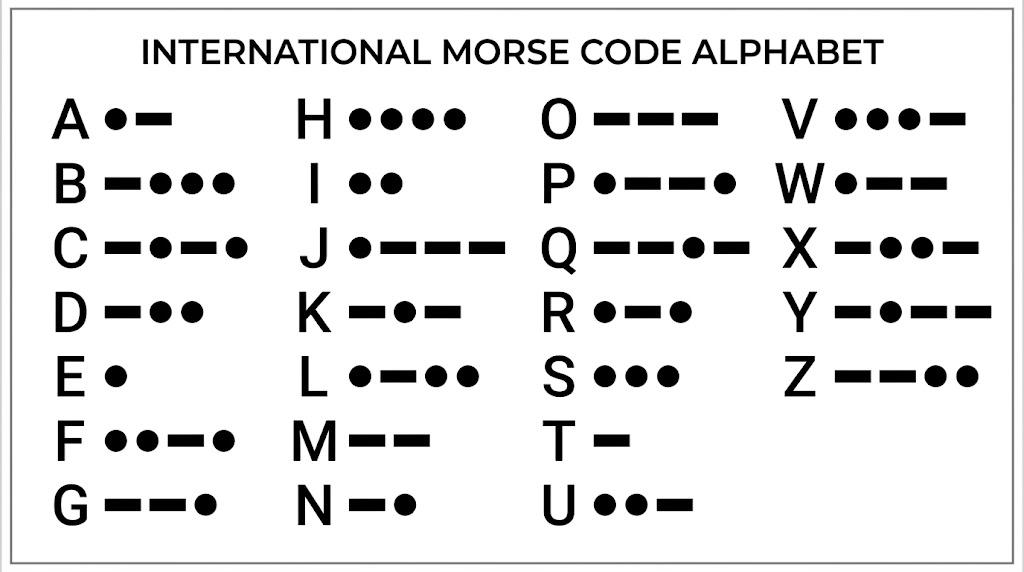
Complete Morse Code Alphabet Chart (A to Z)
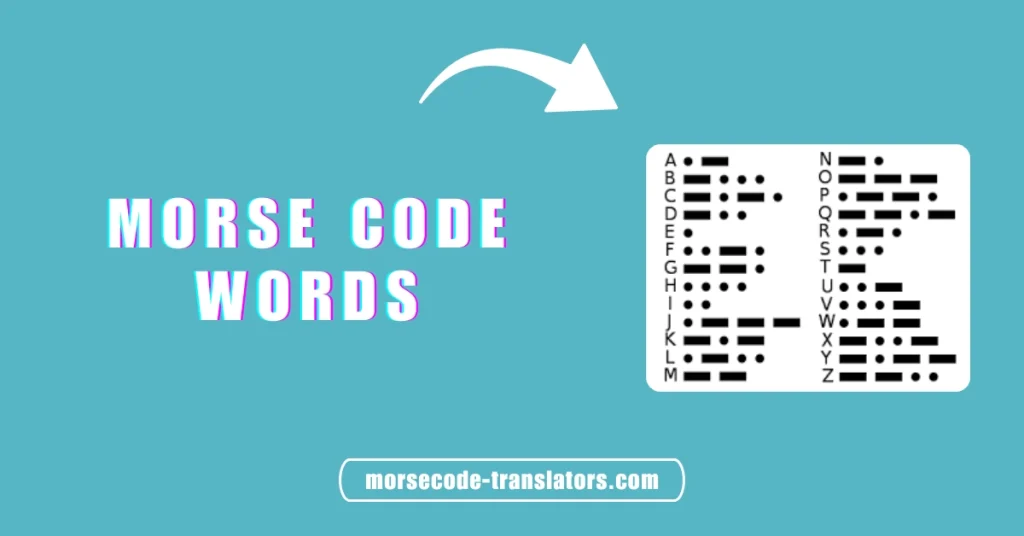
Here is the full alphabet in Morse code. Every letter from A to Z, its Morse code sequence, the spoken rhythm used by radio operators, and a quick memory cue to help it stick.
Letter | Morse Code | Spoken Rhythm | Memory Cue |
A | • — | dit-dah | “A-way” |
B | — • • • | dah-dit-dit-dit | “Back to basics” |
C | — • — • | dah-dit-dah-dit | “Come and go” |
D | — • • | dah-dit-dit | “Down below” |
E | • | dit | Shortest letter, most common |
F | • • — • | dit-dit-dah-dit | “Find your way” |
G | — — • | dah-dah-dit | “Go, go stop” |
H | • • • • | dit-dit-dit-dit | Four quick taps |
I | • • | dit-dit | Two fast dots |
J | • — — — | dit-dah-dah-dah | “Just long long long” |
K | — • — | dah-dit-dah | “Kay, okay” |
L | • — • • | dit-dah-dit-dit | “a LONG little” |
M | — — | dah-dah | Two slow beats |
N | — • | dah-dit | “No dot” |
O | — — — | dah-dah-dah | Three long beats |
P | • — — • | dit-dah-dah-dit | “Pop and drop” |
Q | — — • — | dah-dah-dit-dah | “Queen bee Queen” |
R | • — • | dit-dah-dit | “a Round trip” |
S | • • • | dit-dit-dit | Three quick dots |
T | — | dah | One long beat |
U | • • — | dit-dit-dah | “Up up long” |
V | • • • — | dit-dit-dit-dah | Three dots then long |
W | • — — | dit-dah-dah | “Wait long, long” |
X | — • • — | dah-dit-dit-dah | “X marks both ends” |
Y | — • — — | dah-dit-dah-dah | “You wait, you wait” |
Z | — — • • | dah-dah-dit-dit | “Zoo zoo quick quick” |
Save this chart. Print it. Keep it somewhere visible while you practice.
How to Learn the Morse Code Alphabet Step by Step
Learning the full alphabet in Morse code feels overwhelming when you look at all 26 letters at once. It is not. Break it down, and it becomes very manageable.
Start With the Six Most Common Letters
Do not start with A and work through Z in order. That is the slow way. Start with the letters that appear most in English text: E, T, A, N, I, S. These six cover a huge percentage of everyday words, and they all have short, simple codes.
E is one dot. T is one dash. You already know two letters. Keep going.
Group Letters by Pattern Length
Once you have the basics, organise the rest by how many signals they use. Your brain learns patterns in groups much faster than it learns random sequences.
1 signal: E (•), T (—)
2 signals: A (• —), I (• •), M (— —), N (— •)
3 signals: S (• • •), U (• • —), R (• — •), W (• — —), D (— • •), K (— • —), G (— — •), O (— — —)
4 signals: H (• • • •), V (• • • —), F (• • — •), L (• — • •), P (• — — •), J (• — — —), B (— • • •), X (— • • —), C (— • — •), Y (— • — —), Z (— — • •), Q (— — • —)
Work through one group at a time. Master it before moving to the next.
Move From Letters to Short Words
Once letters feel comfortable, start building words. Start with SOS (• • • — — — • • •). Then try HI (• • • • • •). Then OK (— — — — • —). Short words build confidence fast and give you something real to decode.
This is also where how to learn Morse code practice comes in. Decoding real words is completely different from staring at a chart. Your brain starts connecting rhythm to meaning instead of rhythm to symbol.
Use a Translator for Daily Practice
A Morse Code Translator does two things well. It converts your text into Morse so you can study the patterns. It also plays the audio so you hear the actual dit-dah rhythm. Spend ten minutes a day typing words into the translator and listening back. You will be surprised how quickly your ear starts recognising letters before your brain consciously works them out.
Morse Code Alphabet and Numbers (0 to 9)
Letters are only half the story. The full Morse code alphabet and numbers system covers digits 0 through 9 as well.
Numbers follow a logical pattern that letters do not. Every digit uses exactly five signals. The pattern moves from all dashes to a mix and back again. Once you see it, you cannot unsee it.
Number | Morse Code | Pattern Logic |
0 | — — — — — | All dashes |
1 | • — — — — | One dot, four dashes |
2 | • • — — — | Two dots, three dashes |
3 | • • • — — | Three dots, two dashes |
4 | • • • • — | Four dots, one dash |
5 | • • • • • | All dots |
6 | — • • • • | One dash, four dots |
7 | — — • • • | Two dashes, three dots |
8 | — — — • • | Three dashes, two dots |
9 | — — — — • | Four dashes, one dot |
Notice how 1 through 5 add a dot each time and remove a dash. Then, 6 through 9 flip the pattern. Numbers are actually easier to memorise than letters once you understand the logic behind them. Check our dedicated Morse Code Numbers page for a deeper breakdown with audio examples.
How the Morse Code Alphabet Actually Works
Knowing the chart is one thing. Understanding how it actually works in real communication is what takes you from memorising symbols to actually reading and sending messages.
Dots and Dashes as Sound
Radio operators do not say “dot” and “dash.” They say “dit” and “dah.” Dit is short and crisp. Dah is longer and holds. When you start learning Morse by sound, which you should, your brain processes patterns much faster than when you stare at a chart.
The letter S sounds like dit-dit-dit. The letter O sounds like dah-dah-dah. Together, SOS becomes dit-dit-dit dah-dah-dah dit-dit-dit. You can tap it on a table right now. Three fast taps, three slow taps, three fast taps.
That is how real operators think. Not symbols. Rhythm.
Spacing Rules That Separate Letters from Words
This is where most beginners go wrong. They learn the letters but ignore the gaps. Spacing is what makes Morse readable.
Gap Type | Duration | Example |
Between signals in a letter | 1 unit | Dot then dash in “A” |
Between letters in a word | 3 units | “S” then “O” in SOS |
Between words in a sentence | 7 units | “SOS” then the next word |
If you rush through the gaps, letters blur into each other, and nothing makes sense on the receiving end. Spacing is not optional. It is structured.
International Morse Code vs Original American Morse Code
The original version had different codes for a handful of letters and used some signals that the international version dropped entirely. The International Telecommunication Union standardised the system that the entire world now uses. Every chart, every tool, and every training resource uses this version. When people say Morse code alphabet, they mean the international standard.
Smart Memory Tricks for the Morse Alphabet
Charts alone will not make Morse stick. What makes it stick is connecting each code to something your brain already knows.
Word Association Method
Give each tricky letter a short phrase that matches its rhythm. The phrase does not have to be clever. It just has to match the beats.
C (— • — •) sounds like “COME and GO” (long-short-long-short). F (• • — •) sounds like “find a WAY” (short-short-long-short). L (• — • •) sounds like “a LONG little” (short-long-short-short). Q (— — • —) sounds like “GOD SAVE the QUEEN” (long-long-short-long).
Make your own. Personal associations stick longer than borrowed ones.
The Dit-Dah Singing Technique
Say the codes out loud while you tap them. Not “dot dash” but “dit dah.” Morse code is a language of rhythm, and rhythm lives in your mouth and hands long before it lives in your memory.
B (— • • •) is “DAH dit dit dit.” U (• • —) is “dit dit DAH.”
Sing them to a beat. Tap them on your desk. Do it while walking. The physical repetition builds what musicians call muscle memory, and muscle memory does not forget.
Visual Pattern Mapping
Some letters have codes that visually match their shape or meaning. A (• —) looks like a short spark followed by a long beam. O (— — —) is three long signals like three open doors. These visual cues are personal and do not work for everyone, but for visual learners, they can make a few stubborn letters finally click.
Learn Mirror Pairs
This one is genuinely useful, and almost nobody talks about it. Several Morse letters are mirror images of each other. Learning them as pairs cuts your memorisation work in half.
Letter | Code | Mirror | Code |
K | — • — | R | • — • |
D | — • • | U | • • — |
N | — • | A | • — |
G | — — • | W | • — — |
Learn one letter in each pair, and you automatically have a strong head start on its mirror.
Common Mistakes Beginners Make With the Morse Alphabet
Most people hit the same walls when learning Morse code for alphabet recognition. Knowing the mistakes in advance saves you weeks of confusion.
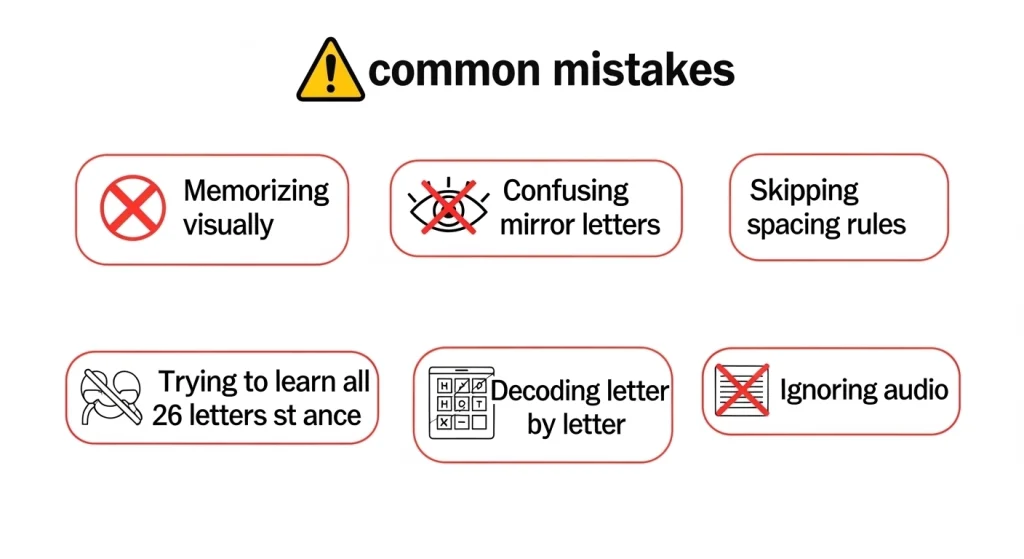
- Memorising visually instead of by rhythm. If you are staring at dots and dashes on a page instead of listening to the sounds, you are building a wrong habit. Rhythm is how Morse works in real life.
- Confusing mirror letters. D and U, N and A, K and R trip up beginners constantly because they look similar on a chart. The mirror pairs trick above solves this, but only if you practice them together deliberately.
- Skipping spacing rules. Letters run together, and nothing decodes correctly. Spacing is half the language. Learn it early.
- Trying to learn all 26 letters at once. This leads to burnout and confusion. Group learning is faster and less stressful.
- Decoding letter by letter. Experienced operators hear entire words as single units, not individual letters. Push yourself toward word recognition as soon as possible. It feels impossible at first, and then it suddenly clicks.
- Ignoring audio tools. If your only practice resource is a printed chart, you are missing the entire sonic dimension of the language. Use the Morse Code Translator to hear every letter and word you study.
Fun Ways to Practice the Morse Alphabet
Practice does not have to mean drilling a chart until your eyes glaze over. The most effective practice feels nothing like studying.
Flashlight Signalling With a Friend
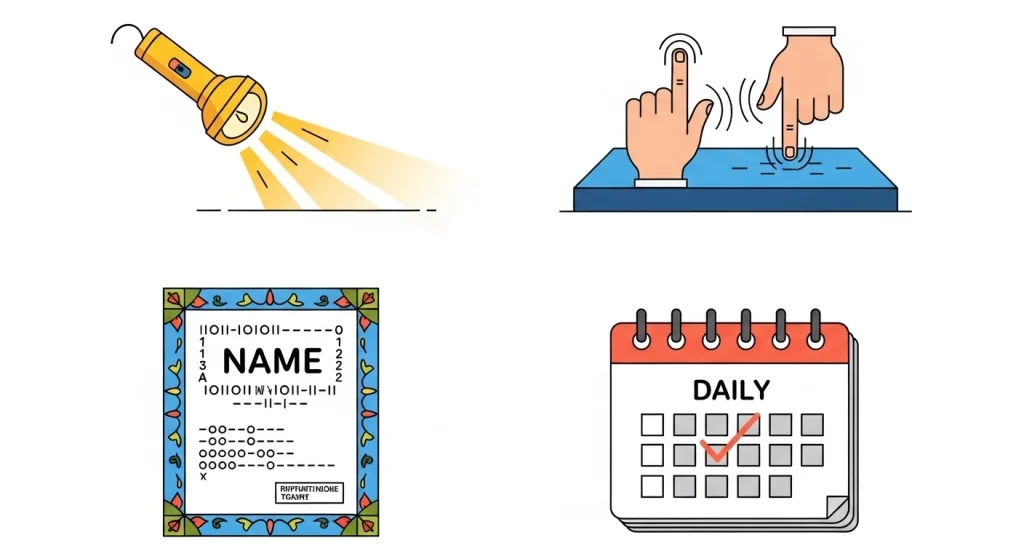
Grab a torch and a friend. One person sends a word using short and long flashes. The other decodes it. Swap roles. Start with three-letter words. Work up to sentences. It sounds old-fashioned, but it builds decoding speed faster than any app because the stakes feel real.
Tap Battle Games
One person taps a word on a table. The other person decodes it and taps back a reply. No charts, no looking anything up. Pure recall under pressure. This builds both encoding and decoding at the same time.
Morse Code Art and Journaling
Write your name in Morse and design it as a poster, a bracelet pattern, or a journal header. Personal phrases like “I love you” in Morse become meaningful when you take time to render them visually. Check out I love you in Morse code if you want to start with something personal and memorable.
Daily Phrase Challenges
Pick one phrase every day and practice it until it feels automatic. Useful starting points include SOS, HI, YES, NO, and common Morse code words people actually use. After two weeks of daily phrases, you will have a working vocabulary that decodes without any effort.
Where the Morse Code Alphabet Is Still Used Today
Morse code did not die. It adapted.
Aviation navigation
Every VOR station, the radio navigation system pilots use to confirm their position, broadcasts a three-letter Morse identifier. Pilots hear the code and confirm they are on the correct signal. The Los Angeles VOR transmits the identifier LAX in Morse. This is still standard practice in commercial and private aviation.
HAM radio operators
Amateur radio enthusiasts around the world use Morse code transmissions, called CW or continuous wave, because they travel farther and cut through interference better than voice transmissions. Many operators around the world still pursue Morse proficiency as a skill and a community tradition.
Survival and military scenarios
In situations where electronics fail and voice communication is impossible, Morse code transmitted through taps, light, or any available signal remains a functional option. It has been used in prisoner of war situations, remote survival cases, and disaster zones.
Accessibility technology
This one surprises most people. Morse code is built into assistive technology for users with physical disabilities who cannot use standard keyboards. Morse input allows people to type using two switches, one for dots and one for dashes. It is a genuinely life-changing application.
Maritime distress signalling
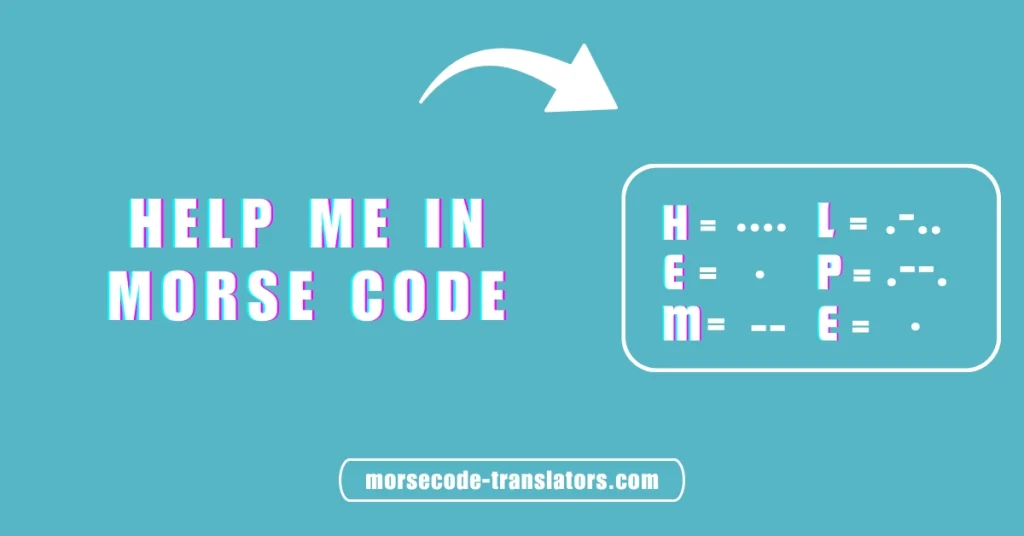
Ships still use Morse as a backup communication system. SOS in Morse code is the universally recognised distress signal, and knowing help me in Morse code could matter in a real emergency.
Frequently Asked Questions
What is the full Morse code alphabet from A to Z?
The full Morse code alphabet A to Z assigns a unique dot-dash sequence to each of the 26 letters. E is the shortest at one dot, and Q, Y, and J are among the longest at four signals each.
How do you read Morse code alphabet for beginners?
Start by learning the rhythm, not the visual pattern. Listen to the dit-dah sounds for each letter using an audio tool. Begin with the most common letters (E, T, A, N, I, S) and build from there. Focus on spacing rules so letters do not run together.
What is the easiest way to memorise the Morse alphabet?
Group letters by pattern length and use word association mnemonics to match rhythms. Learning mirror pairs is especially effective. Combine visual study with audio practice for the fastest results.
How long does it take to learn the Morse code alphabet?
Most people can memorise all 26 letters within two to four weeks with around ten to fifteen minutes of daily practice. Decoding at speed takes longer, usually a few months of consistent practice.
Is Morse code still used today?
Yes. Aviation navigation, HAM radio, accessibility technology, and maritime communication all use Morse code actively. It has real, practical applications in the modern world.
What is the difference between dots and dashes in Morse code?
A dot is a short signal lasting one time unit. A dash is a long signal lasting three time units. The contrast between them, and the spacing between signals is what creates distinct patterns for each letter and number.
What does SOS look like in Morse code?
SOS is written as • • • — — — • • •. Three dots, three dashes, three dots, sent continuously with no gaps between the letters. It was chosen because its rhythm is unmistakable even under poor signal conditions.