Morse Code Words: Full List & Fast Translator
The reason you searched for “Morse code words” is that you received a message coded with dots and dashes, but are clueless as to what it means. But do not fret; you have landed on the right site.
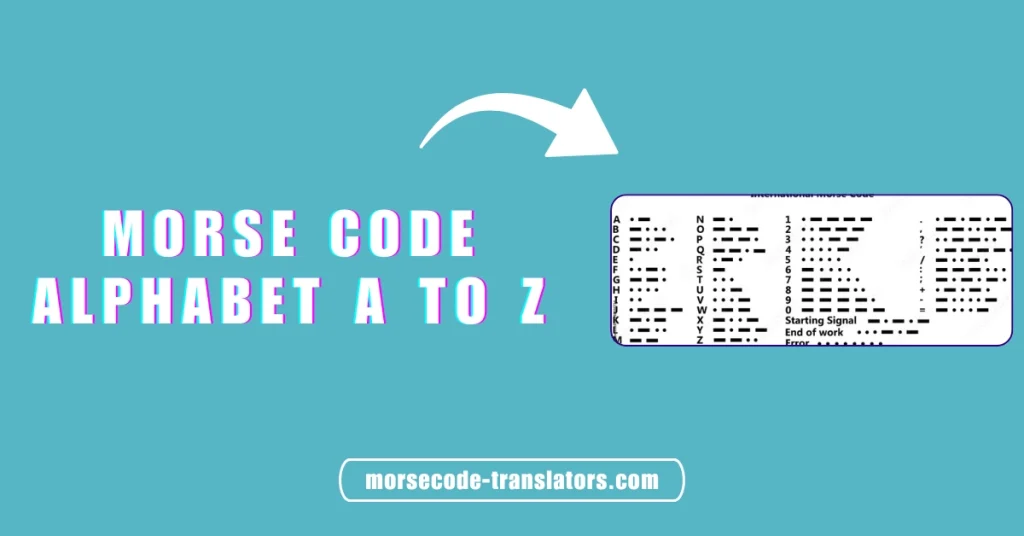
Many websites provide you with a huge alphabet chart and leave you guessing about the rest of it. They are not useful if you need an understanding of how words form, translation of a sentence, and deciphering words like SOS in Morse code format. All this and more is included in this guide, including how words are formed, most commonly used words, an A to Z guide, and instant translation through our Morse Code Translator.
No prior knowledge required. No expertise needed whatsoever.
How Words Are Built in Morse Code
Every word in Morse code follows a simple structure. Each letter gets translated into its own dot and dash pattern. The letters sit next to each other with a small gap between them. When one word ends and the next begins, a longer gap separates them.
This spacing is what makes Morse code readable, both on paper and when transmitted as sound or light. The gaps are measured in units.
Spacing and Timing Rules
Element | Gap Length |
Between signals inside one letter | 1 unit |
Between letters in the same word | 3 units |
Between two separate words | 7 units |
These rules apply whether you are tapping on a surface, flashing a light, or transmitting over a radio. The pattern stays the same. This is part of what makes International Morse Code a universal system. Anyone trained in it anywhere in the world reads the same gaps the same way.
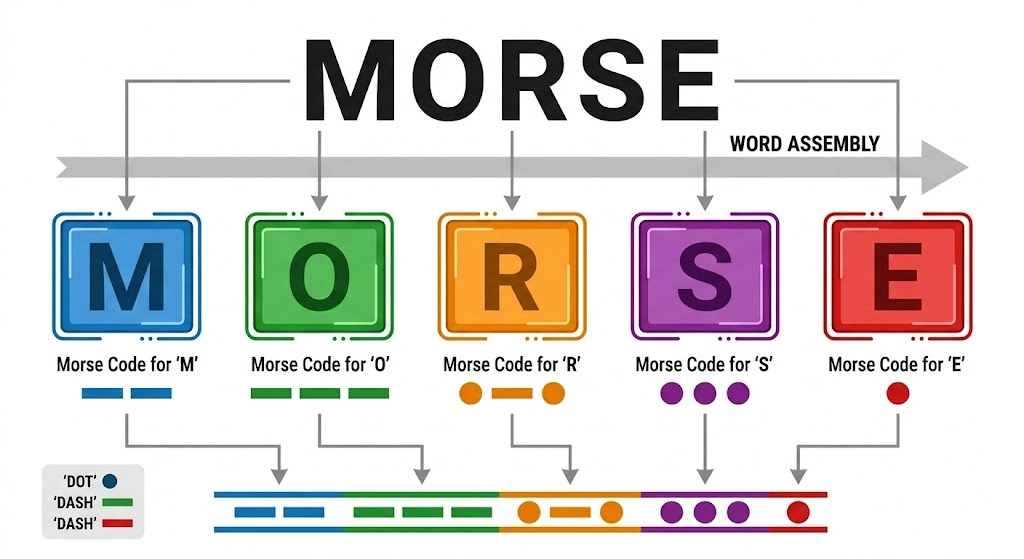
Here is a quick example. Take the word MORSE itself.
- M = —
- O = —
- R = .-.
- S = …
- E = .
Written together with proper letter spacing: — — .-. … .
That is one word, five letters, each separated by a 3-unit gap. Simple once you see the pattern.
Common Morse Code Words and Their Translations
These are the words that matter most. Whether you are learning for fun, preparing for emergencies, or just trying to decode a message someone sent you, these are the words that come up again and again. Knowing them by memory makes everything else easier.
Emergency Words in Morse Code
Emergency communication is where Morse code has always mattered most. Ships in distress, pilots in trouble, hikers lost in the mountains. These words are not just vocabulary. They are lifelines.
Word | Morse Code | Use Case |
… — … | Universal distress signal | |
HELP | …. . .-.. .–. | Immediate assistance needed |
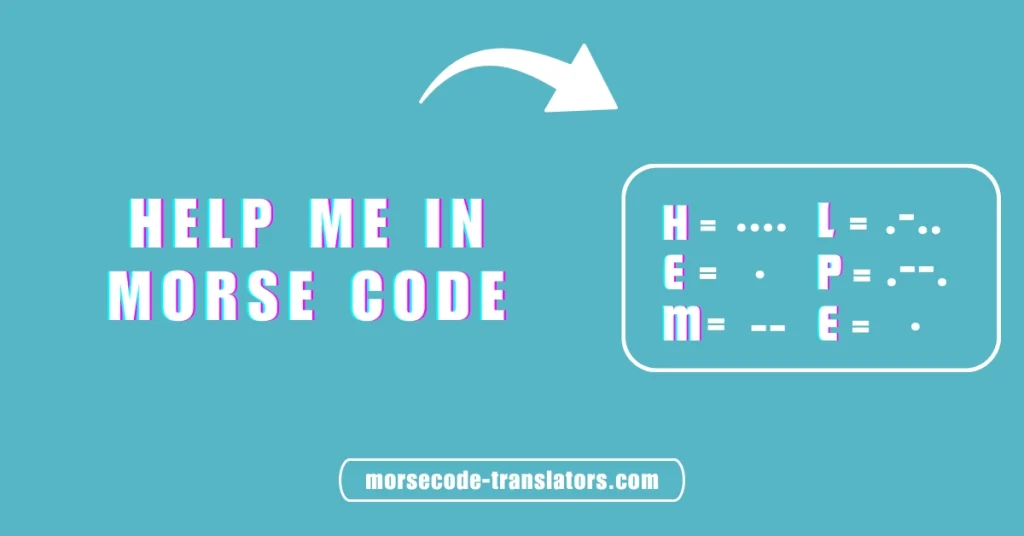
HELP ME | …. . .-.. .–. — . | Personal distress call |
MAYDAY | — .- -.– -.. .- -.– | Aviation emergency |
DANGER | -.. .- -. –. . .-. | Warning of a nearby threat |
STOP | … – — .–. | End of sentence or halt signal |
FIRE | ..-. .. .-. . | Active fire emergency |
WAIT | .– .- .. – | Pause, standby signal |
SOS is the most recognised Morse code word in the world. Its pattern, three short signals, three long signals, three short signals, was chosen not for what it stands for but because that rhythm is almost impossible to confuse with anything else. SOS in Morse Code has its own story worth reading in full.
HELP and You should also practice signaling help me in Morse code so you are prepared for any situation. are equally critical to know. In a real emergency, being able to tap, flash, or transmit these words could get you rescued when nothing else works.
Everyday Greeting Words in Morse Code
Not every use of Morse code is an emergency. A lot of people learn it for fun, for ham radio, or just to send a message that feels a little more personal. These greeting words are some of the most searched Morse code translations online.
Word | Morse Code |
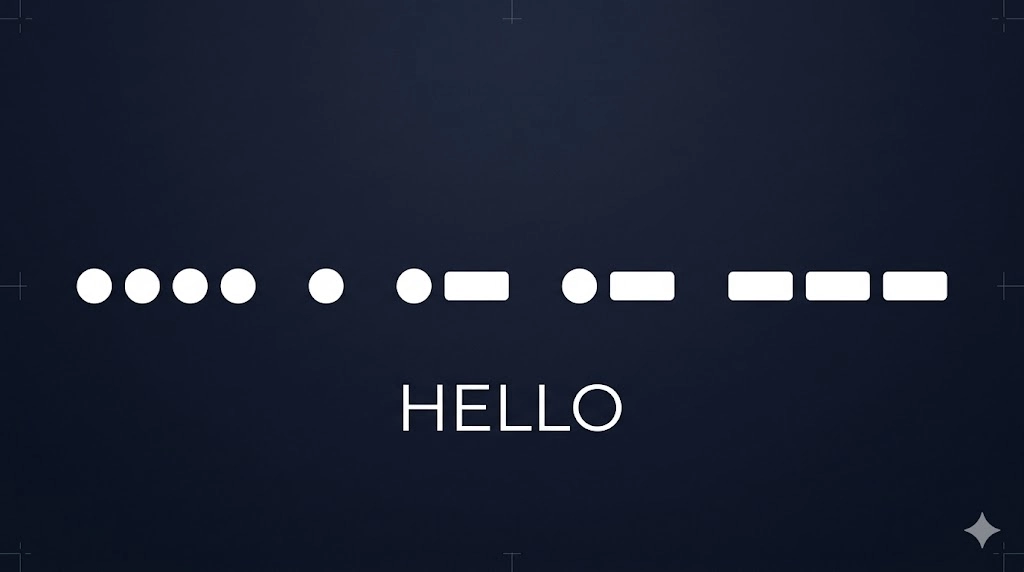
HELLO | …. . .-.. .-.. — |
HI | …. .. |
GOODBYE | –. — — -.. -… -.– . |
GOOD MORNING | –. — — -.. — — .-. -. .. -. –. |
GOODNIGHT | –. — — -.. -. .. –. …. – |
THANK YOU | – …. .- -. -.- -.– — ..- |
SORRY | … — .-. .-. -.– |
PLEASE | .–. .-.. . .- … . |
Hello in Morse Code is one of the most searched individual words, and a great starting point if you are brand new to this system. It uses five common letters and gives you a real feel for how words flow in Morse.
Emotional and Personal Words in Morse Code
Morse code shows up in tattoos, jewellery, and handwritten notes more than most people realise. These personal words are the ones people most often want to encode for keepsakes, gifts, and messages with a hidden meaning.
Word | Morse Code |
LOVE | .-.. — …- . |
I LOVE YOU | .. / .-.. — …- . / -.– — ..- |
I MISS YOU | .. / — .. … … / -.– — ..- |
FOREVER | ..-. — .-. . …- . .-. |
FAMILY | ..-. .- — .. .-.. -.– |
FRIEND | ..-. .-. .. . -. -.. |
BEAUTIFUL | -… . .- ..- – .. ..-. ..- .-.. |
HOPE | …. — .–. . |
I Love You in Morse Code is one of the most popular personal Morse translations. People use it for anniversary tattoos, bracelet engravings, and birthday card messages. The pattern .. / .-.. — …- . / -.– — ..- has become iconic in that space.
Basic Response Words in Morse Code
These short words are the backbone of any Morse code conversation. Ham radio operators use them constantly. Emergency responders relied on them for decades. They are short, fast to transmit, and impossible to misread.
Word | Morse Code | Meaning |
YES | -.– . … | Affirmative |
NO | -. — | Negative |
OK | — -.- | Confirmed or safe |
ROGER | .-. — –. . .-. | Message received and understood |
WILCO | .– .. .-.. -.-. — | Will comply with instructions |
Famous Morse Code Words You Should Know
Some words in Morse code carry more weight than others. These have a history behind them. Understanding where they came from makes them much easier to remember.
SOS: Why That Pattern?
SOS does not stand for anything. It never did. In the early 1900s, when maritime communication was shifting toward standardised distress signals, operators needed something that could not be confused with any other transmission. Three short, three long, three short. No letters in the actual message, just an unmistakable rhythm. The letters SOS were assigned to that pattern afterwards because they fit, not the other way around.
The full pattern … — … can be tapped on a pipe, flashed with a torch, or transmitted on a radio. It works in every medium. That simplicity is what made it last over a century.
73: The Ham Radio Goodbye
Here is something most people outside the amateur radio world do not know. The number 73 is one of the most used Morse code words in existence, except it is not technically a word at all. It is a number that carries a specific meaning in ham radio tradition.
73 means best regards. When a ham radio operator finishes a conversation, they send –… …– and the other operator knows the exchange is ending on a friendly note. It is the radio equivalent of signing off with warmth.
This tradition comes from a numerical code system used by telegraph operators in the 1800s. Many of those codes faded over time. 73 survived because ham radio culture kept it alive.
CQ: The Universal Call Out
Before any conversation on the airwaves can happen, someone has to call out and see who is listening. That is what CQ does. Transmitted as -.-. –.-, it roughly translates to seek you, an invitation for any station within range to respond.
Ham radio operators still broadcast CQ today, particularly during radio contests and when trying to reach distant stations. You are essentially standing in the middle of a room and saying, “Is anyone out there?”
ROGER and WILCO: Military Roots
These two words became part of everyday English because of their Morse code and radio communication origins. ROGER meant the letter R in older phonetic alphabets, and R stood for received. So ROGER simply meant your message got through.
WILCO went further. It meant that we will comply. You did not just receive the order; you were committing to follow it. The military needed words that left no room for misunderstanding. These two delivered that.
Morse Code Words List A to Z
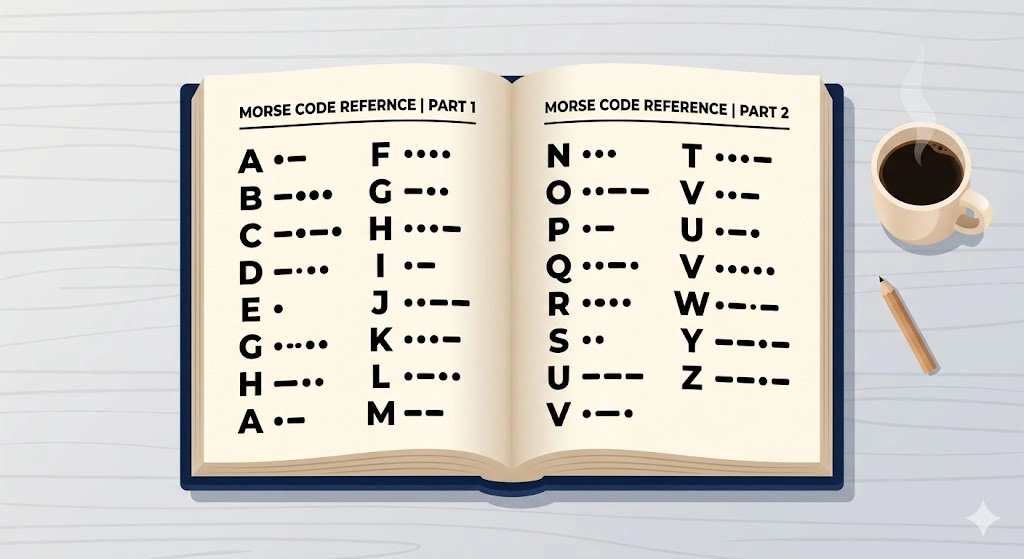
This is your complete reference. Every letter covered, practical words only, nothing obscure or difficult to use in real life.
Letter | Word | Morse Code |
A | ALERT | .- .-.. . .-. – |
B | BRAVE | -… .-. .- …- . |
C | CALM | -.-. .- .-.. — |
D | DANGER | -.. .- -. –. . .-. |
E | ENOUGH | . -. — ..- –. …. |
F | FAMILY | ..-. .- — .. .-.. -.– |
G | GO | –.— |
H | HELP | …. . .-.. .–. |
I | INDEED | .. -. -.. . . -.. |
J | JOIN | .— — .. -. |
K | KEEP | -.- . . .–. |
L | LOVE | .-.. — …- . |
M | MOVE | — — …- . |
N | NEAR | -. . .- .-. |
O | OPEN | — .–. . -. |
P | PEACE | .–. . .- -.-. . |
Q | QUICK | –.- ..- .. -.-. -.- |
R | READY | .-. . .- -.. -.– |
S | SAFE | … .- ..-. . |
T | TRUST | – .-. ..- … – |
U | UNITE | ..- -. .. – . |
V | VALOR | …- .- .-.. — .-. |
W | WAIT | .– .- .. – |
X | EXACT | -..- . .- -.-. – |
Y | YES | -.– . … |
Z | ZERO | –.. . .-. — |
For numbers in Morse code, check out our Morse Code Numbers guide, which covers 0 through 9 with full translation charts.
What Are Morse Code Words?
Morse code is a language that consists of two distinct sounds; the first one is referred to as the dot, while the second sound is the dash. Every letter in the alphabet has a unique combination of dots and dashes. Letters form words. Words are known as Morse code words.
This is how Morse code stands out compared to regular alphabets. For instance, one letter, such as E, consists of a dot. This does not tell much. However, combining it with other letters, including H, L, and P, produces the word HELP. In case of an emergency, such a word can be helpful enough to save your life.
Morse Code Alphabet provides a good basis to start from. Words, however, do all the talking. Being able to understand words makes you efficient.
How to Translate Words to Morse Code
There are two ways to do this. You can do it by hand, letter by letter. Or you can use a translator and get results in seconds. Both have value depending on why you are learning.
Manual Translation: Step by Step
- Look up each letter of your word in the Morse alphabet
- Write the dot and dash pattern for that letter
- Add a 3-unit space between each letter
- Add a 7-unit space between words if translating a phrase
- Read the full pattern back to verify it
Example: Translating HELP manually.
H = …. E = . L = .-.. P = .–.
Full word: …. . .-.. .–.
That takes time. It is a useful skill, but slow when you need a quick answer.
Use a Word to Morse Code Translator
For instant results, our Morse Code Translator converts any word or phrase in seconds. Type the text, get the Morse output, and even hear the audio playback so you can learn the rhythm.
Key advantages of using the translator:
- Handles full sentences, not just single words
- Provides audio so you learn by ear
- Works on mobile and desktop
- No sign-up or download needed
Morse Code Words in Real Life
Morse code is not a museum piece. People use it in active, meaningful ways right now.
Ham Radio and Amateur Operators
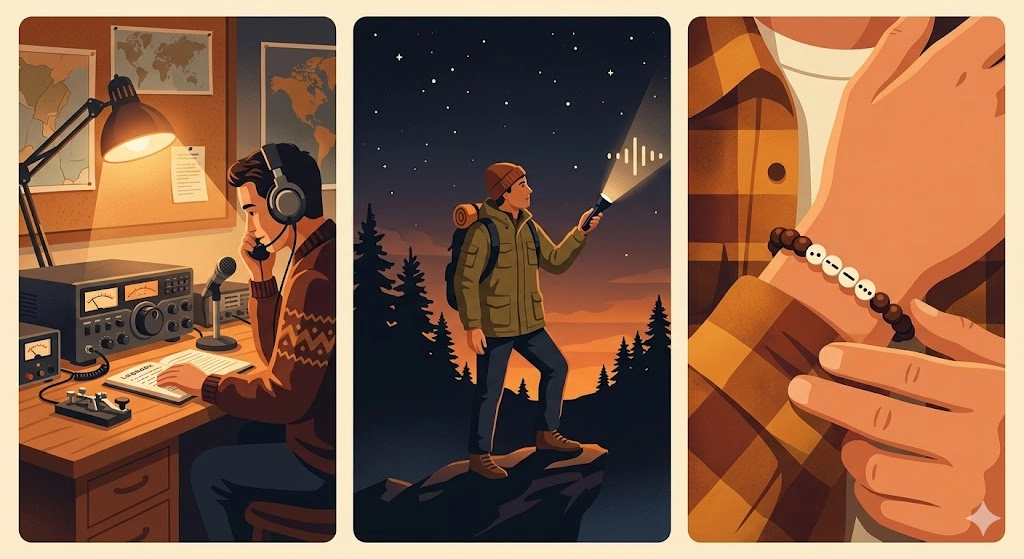
Amateur radio is the most active community keeping Morse code alive. Operators use it for long-distance contacts, international radio contests, and emergency communication networks. The International Morse Code standard means a ham operator in Pakistan can exchange a message in Morse with someone in Canada without any translation needed.
Getting a ham radio license in many countries still includes a Morse code component because regulatory bodies recognise its value in emergency and low-power communication scenarios.
Emergency Preparedness and Survival
Emergency professionals and survival instructors teach key Morse code words as part of basic preparedness. The reason is practical. Morse code works when other systems fail. A radio with a dying battery can still transmit … — …. A person trapped under debris can still tap HELP on a pipe.
Knowing even ten words in Morse code, the ones in the emergency section above, puts you in a significantly better position than someone who knows none.
Tattoos, Jewellery, and Personal Messages
This is one of the fastest growing non-technical uses of Morse code. People encode names, dates, phrases, and personal mantras into Morse code for tattoos and jewellery. The dots and dashes look abstract to a stranger but carry deep personal meaning to the person wearing them.
LOVE, I LOVE YOU, FOREVER, and FAMILY are among the most requested translations for this purpose. You can translate any personal phrase using our Morse Code Translator before taking it to a tattoo artist or jeweller.
Tips for Memorizing Morse Code Words Faster
Learning Morse code does not have to be a long painful process. These four approaches work better than just staring at a chart.
Start With the Words You Will Actually Use
Do not begin with the full alphabet. Start with HELP, SOS, YES, NO, and HELLO. These five words cover the most ground in the least amount of time. Once you know them solidly, add ten more.
Use our Morse Code Translator to type each word and listen to the audio output. Hearing the rhythm once is worth more than reading the pattern five times.
Learn by Sound, Not Just by Eye
Morse code was designed to be heard, not read. The dots and dashes on paper are a visual representation of sound patterns. When you learn a word, say it out loud while you trace the rhythm. Di-di-dit for S. Dah-dah-dah for O. Put them together and you start hearing SOS before you even see the written pattern.
Group Words by Category
Your brain retains grouped information more efficiently than isolated facts. Learn emergency words together. Learn greeting words together. When you practice YES and NO in the same session, they anchor each other in memory.
Check out our guide on How to Learn Morse Code for a full, structured learning path that follows this same category-based approach.
Use a Translator to Check Yourself
Write out a word in Morse code from memory. Then run it through the Morse Code Translator to verify. This self-testing approach is one of the fastest ways to catch mistakes and solidify patterns. Ten minutes of this daily beats an hour of passive reading.
Frequently Asked Questions
What is the most common Morse code word used today?
SOS remains the most universally recognised Morse code word. In active amateur radio communities, 73 is probably transmitted more frequently in day-to-day exchanges.
How do I translate words to Morse code?
You can do it manually by looking up each letter in a Morse alphabet chart and writing out the dot and dash patterns with proper spacing. For faster results, use a word-to-Morse code translator.
Are Morse code words the same in every language?
The International Morse Code standard covers the Latin alphabet, which means the Morse patterns for English words are consistent worldwide. The core system used for common English words is universal.
Can I send Morse code words without a radio?
Absolutely. Morse code works through any medium that can produce two distinguishable signals. Tapping on a surface, blinking a flashlight, whistling short and long tones, or even blinking your eyes.
What is the easiest Morse code word to learn first?
HI is the simplest. It is just …. .., four dots and two dots. It is short, memorable, and gives beginners a quick confidence boost.
What does 73 mean in Morse code?
73 means best regards in amateur radio tradition. It is transmitted as –… …– and used at the end of a conversation as a friendly sign-off.
Why do people use Morse code for tattoos and jewellery?
Morse code in tattoos and jewellery allows people to carry a personal message that only they fully understand at a glance. Common choices include names, meaningful dates, and phrases like I LOVE YOU or FOREVER.