Y in Morse Code (-.--): How to Write, Say and Remember It
In Morse code, the letter Y is written as dash dot dash dash (-.–). It is spoken as “dah-dit-dah-dah.” That is the short answer, but if you want to truly remember the letter, hear it correctly, and use it inside real words and messages, there is a lot more worth knowing.
Many beginners can recite a few letters but freeze when Y shows up, because it is long and looks similar to several other characters. The good news is that Y follows a very simple logic, and once you see it, the letter becomes one of the easiest to recognise.
In this complete guide, you will learn the Y Morse code symbol, its sound and exact timing, memory tricks that work, comparisons with look-alike letters, practical examples, and the best ways to practice. You can test everything as you read with the free Morse code translator, which converts text to Morse and plays the audio instantly.
If you want to convert full words or sentences, try our Morse Code Translator to quickly switch between text and Morse code.
What Is Y in Morse Code?
Y is one of the 26 letters of the International Morse Code alphabet. Like every letter and number in Morse, it is built from only two signals: short dots and long dashes. This section explains exactly how Y is written, how it sounds, and how long it takes to send. To understand how Y fits within the full letter system, check our Morse Code Alphabet A to Z guide.
The Y Morse Code Symbol
The letter Y is represented as -.–, which breaks down into four signals:
- 1 dash
- 1 dot
- 2 dashes
You may also see it written with typographic symbols such as “−·−−” or spelled out as “dah-dit-dah-dah.” All of these mean exactly the same thing. When you type the letter Y into a translator, this is the pattern you will see.
How Y Sounds in Morse Code
Morse code is meant to be heard. Experienced operators do not count dots and dashes; they recognise the rhythm of each letter as a single sound. Say it out loud as dah-dit-dah-dah: a long tone, a short tone, then two long tones. The “dah” sounds are about three times longer than the “dit.”
Hearing the pattern repeatedly is the quickest way to learn it. Play the letter in the translator several times and then try to tap it back on a desk.
How Long Does Y Take to Send?
Morse timing is based on one basic unit. A dot lasts 1 unit, a dash lasts 3 units, and the silence between signals inside the same letter lasts 1 unit. Add these together for Y:
- Dash (3) + gap (1) + dot (1) + gap (1) + dash (3) + gap (1) + dash (3) = 13 units
That makes Y one of the longer letters in the alphabet, compared with E (a single dot, 1 unit) or T (a single dash, 3 units).
A Quick Look at Morse Code and the Letter Y
To understand why Y looks the way it does, it helps to know a little about where the code came from. A short bit of background also makes the letter easier to remember.
You can also learn how digits are represented by reading our Morse Code Numbers reference.
Where International Morse Code Comes From
Morse code was developed in the 1830s and 1840s for the electric telegraph, with Samuel Morse and Alfred Vail associated with its creation. Over time, a standardised version known as International Morse Code became the form used around the world, especially in radio. It is the version used today by amateur radio operators, pilots, and anyone using a modern translator.
How Y Fits Into the Alphabet
In International Morse, letters that appear most often in English tend to have the shortest codes. E is a single dot and T is a single dash, because they are extremely common. Y is used less often, roughly 2 percent of the time in English text, so it is given a longer four-signal code.
How Y Fits Into the Alphabet
Even though Y is not the most frequent letter, it appears in everyday words like YES, YOU, DAY, WAY, PLAY and HAPPY. You cannot send a proper sentence without it, which is why every learner needs to know it well.
Y in Morse Code Audio and Timing
The sound of a letter is more important than the way it looks on paper. This section covers how fast Y is sent, how spacing affects it, and a common mistake that can turn Y into a different pair of letters.
One of the most famous Morse signals is SOS, and our SOS in Morse Code guide explains how to write and recognize it.
How Speed Changes the Sound
Morse speed is measured in words per minute (WPM). A simple formula for the length of one dot in milliseconds is 1200 divided by the WPM. At 10 WPM a dot is about 120 milliseconds, so the 13 units of Y last roughly 1.5 seconds. At 20 WPM a dot is about 60 milliseconds, and Y takes under a second.
Starting slowly is perfectly fine. Most learners begin at a low speed and gradually increase it as recognition becomes automatic.
The Importance of Correct Spacing
Spacing carries as much meaning as the signals themselves. Inside a letter, the gap is 1 unit. Between letters, the gap is 3 units. Between words, it is 7 units. If you leave too much space inside Y, the receiver may hear a different message.
Common Misreading: NM or KT Instead of Y
Because Y is -.–, a badly spaced version can look like two letters:
- N (-.) + M (–) = -. —
- K (-.-) + T (-) = -.- –
If you pause too long in the middle of Y, a listener might decode “NM” or “KT.” Always keep the four signals tightly together, then leave a longer pause before the next letter.
How to Remember Y in Morse Code
Y has a distinctive pattern, which makes it ideal for memory tricks. Try the ideas below and keep the ones that feel natural to you. If you are new to Morse code, our How to Learn Morse Code guide shares simple methods for memorizing letters and signals faster.
Think "K Plus One Dash"
The letter K is dash-dot-dash (-.-). Y is the same pattern with one extra dash at the end (-.–). If you already know K, you already know almost all of Y. Just remember it as “K with a tail.”
Remember the Mirror Letter Q
Reverse the signals of Y (-.–) and you get –.-, which is the letter Q. Learning Y and Q as a mirrored pair means you master two letters with one idea. If you are unsure which is which, check where the single dot sits: second position for Y, third position for Q.
Use the "N Then M" Trick
Y can be thought of as N (-.) followed immediately by M (–). If you already know those two letters, you can build Y by sticking them together without a pause.
Use a Rhythm Chant
Repeat “dah-dit-dah-dah” a few times until it feels like a short musical phrase. Rhythm sticks in the brain far better than a list of dots and dashes. Many learners say it in time with a walking pace or a finger tap.
Draw It Visually
On paper, write a long line, a dot, and two more long lines. Seeing a “long, short, long, long” shape helps visual learners connect the symbol with the sound.
Y in Morse Code Compared With Similar Letters
Beginners often mix up letters that share a similar pattern. Looking at them side by side greatly reduces mistakes and speeds up your progress.
Y vs K
K is -.- and Y is -.–. The only difference is the final dash. When listening, count whether you hear two long tones or three after the first dash and dot.
Y vs C
C is -.-. and Y is -.–. They start identically, so listen carefully to the last signal: short for C, long for Y.
Y vs Q
Q is –.- and Y is -.–. The dot is in a different position, which is why they are mirror images. Use the “second position versus third position” rule.
Y vs X
X is -..- and Y is -.–. Both begin with a dash and a dot, but X has two dots before its final dash, while Y has only one.
Y in Morse Code Examples
Knowing a single letter is only the first step. Seeing Y inside real words builds speed, confidence and genuine fluency.
Common Words With Y
Here are everyday words converted to Morse code:
- YES → -.– . …
- YOU → -.– — ..-
- YOUR → -.– — ..- .-.
- YEAR → -.– . .- .-.
- YELLOW → -.– . .-.. .-.. — .–
- DAY → -.. .- -.–
- MAY → — .- -.–
- WAY → .– .- -.–
- SAY → … .- -.–
- PLAY → .–. .-.. .- -.–
- TODAY → – — -.. .- -.–
- SUNDAY → … ..- -. -.. .- -.–
- HAPPY → …. .- .–. .–. -.–
- FAMILY → ..-. .- — .. .-.. -.–
Notice how often Y appears at the end of a word. That makes the long “dah-dit-dah-dah” feel like a natural finishing sound.
Y in a Short Sentence
“HAPPY DAY” becomes:
…. .- .–. .–. -.– / -.. .- -.–
A single slash separates words, while spaces separate letters. Try decoding it yourself first, then check it in the translator.
Y in the Phonetic Alphabet
When spelling by radio, the modern international phonetic word for Y is “Yankee.” Older alphabets used “Yoke.” Pairing the sound of the Morse letter with the word “Yankee” is another handy memory aid, especially if you plan to use amateur radio.
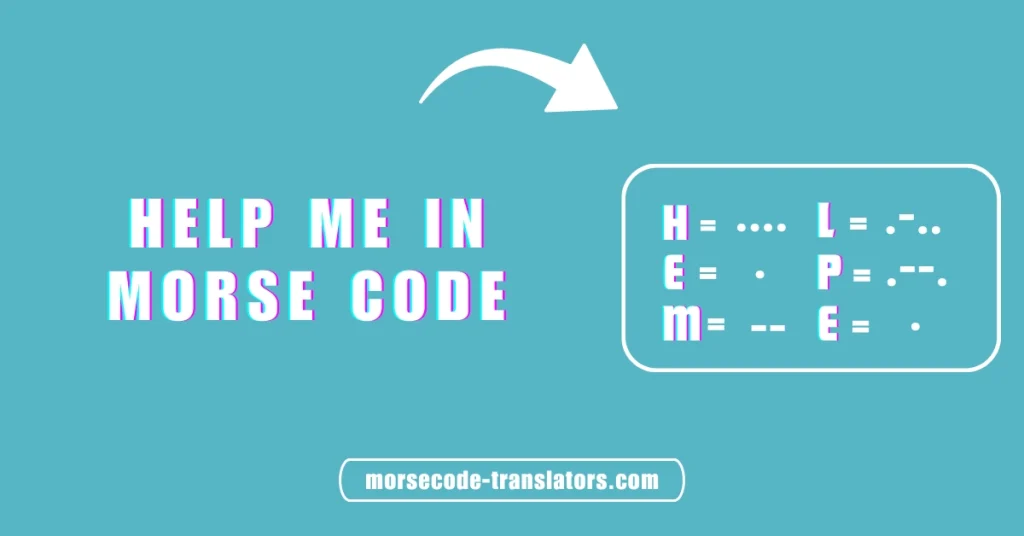
For emergency phrases, see how to write Help Me in Morse Code using the correct dots and dashes.
How to Practice the Letter Y
Practice turns knowledge into reflex. A little time every day beats one long session once a week. Here are the most effective methods.
Use a Free Morse Code Translator
Type any word containing Y into the Morse code translator and instantly see the dots and dashes. Play the audio to train your ear on the real sound of -.–. Try typing your name, your city, or short phrases such as “YES YOU CAN.”
Try Reverse Decoding
Write a few Morse messages on paper, then decode them with the translator to check your answers. Decoding from Morse back to text is the harder skill, and it is the one that makes you genuinely fluent.
Try Reverse Decoding
Write a few Morse messages on paper, then decode them with the translator to check your answers. Decoding from Morse back to text is the harder skill, and it is the one that makes you genuinely fluent.
Learn by Sound With the Koch Method
The Koch method teaches you to recognise characters at a fairly fast speed from the start, beginning with just two characters and adding new ones as you reach high accuracy. Because you learn the sound as a whole, you avoid the habit of counting dots and dashes.
Use the Farnsworth Method
The Farnsworth method sends each letter at a faster speed but adds extra space between letters and words. This lets you hear the true rhythm of Y while giving yourself time to think. It is a popular option for beginners.
Practice With Light or Tap
Tap the rhythm on a desk or flash a phone flashlight: long, short, long, long. Using your hands and eyes together helps muscle memory form quickly, and it is also a fun way to send secret messages to friends.
Common Mistakes When Learning Y
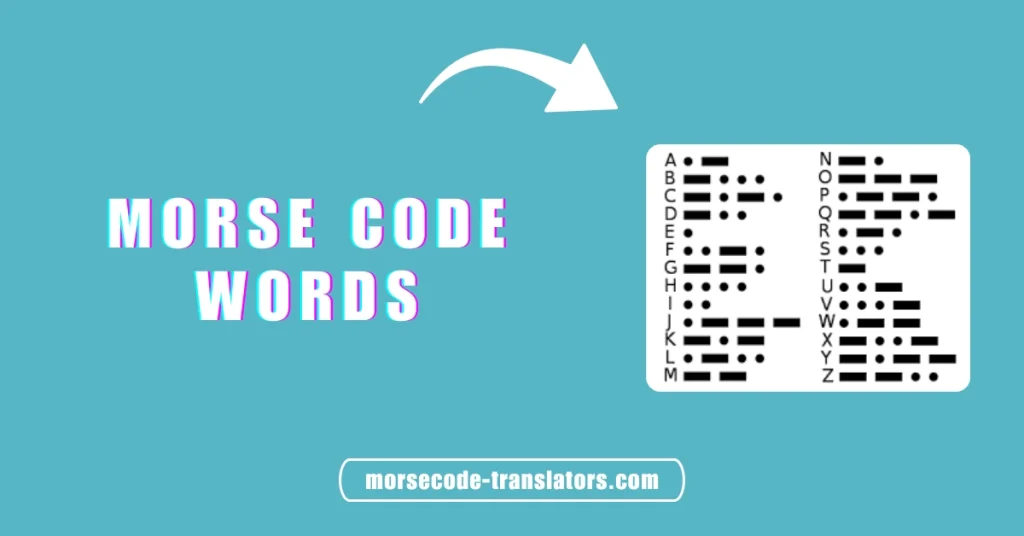
Almost every learner makes the same few errors. Knowing them in advance saves you time and frustration. Once you know individual letters like Y, explore common Morse Code Words to practice reading and writing complete words.
Mixing Up Y and Q
Because they are mirror images, these two get swapped constantly. Always check where the dot falls before deciding.
Making the Dashes Too Short
If your dashes are not clearly longer than your dots, Y can sound like a messy jumble. Keep each dash about three times as long as each dot.
Adding Pauses Inside the Letter
As explained earlier, a long gap in the middle can turn Y into NM or KT. Send all four signals as one smooth unit.
Memorising Only the Look
Learning only the written dots and dashes slows you down later. Pair the symbol with the sound from the very first day.
Fun Ways to Use Y in Morse Code
Once you know the letter, you can start using it creatively. Real use keeps the learning enjoyable. To learn the standard system used worldwide, read our guide to International Morse Code.
Names, Words and Messages
Convert names that contain Y, such as “YASMIN,” “KYLE” or “LILY,” into Morse and share them as a puzzle. Short word games like this are a simple way to build recall.
Jewellery, Gifts and Designs
Morse code is often used in bracelets, necklaces and wall art because the dot-and-dash patterns look clean and meaningful. If a name or message contains Y, the pattern -.– will appear as a distinctive long-short-long-long shape.
Learning Projects and Hobbies
Students, scouts, radio hobbyists and escape-room fans all use Morse code for projects and games. A strong grasp of letters like Y makes those activities far more enjoyable.
Frequently Asked Questions
What is Y in Morse code?
Y in Morse code is -.– (dash dot dash dash), pronounced “dah-dit-dah-dah.”
Is Y the same as Q in Morse code?
No. Q is –.-, which is Y written backwards. They are different letters with mirrored patterns.
How many signals does Y have?
Y has four signals: one dash, one dot and two dashes.
Is Y a hard letter to learn in Morse code?
Not really. Because it is just K (-.-) plus one more dash, most learners pick it up quickly with a little repetition.
How do I write Y in Morse code online?
The dash in N should last exactly three times as long as a dot, following the standard 1:3 timing ratio used throughout Morse code.
What is the best way to memorise Y?
Combine a memory trick (such as “K plus one dash”) with regular listening practice. Hearing the rhythm daily is the most reliable method.
Conclusion
The letter Y in Morse code is -.– (dah-dit-dah-dah). Remember it as K with an extra dash, pair it with its mirror letter Q, and keep the signals tightly together so it is never mistaken for NM or KT. Practice it inside everyday words like YES, YOU, DAY and HAPPY until the rhythm feels natural. For an easy practice example, learn how to write Hello in Morse Code letter by letter.