I Love You in Morse Code: Translation, Symbols & Creative Ways to Use It
You want to say something that actually has a meaning. Not just a text. Not just a heart emoji. You want a message that takes thought, that makes someone stop and smile when they finally figure it out. That is exactly why people search for “I love you in Morse code” every single day.
Maybe you are planning a gift. Maybe you want to write something on a card that feels different. Maybe you just want a private language between you and one person. Whatever the reason, Morse code turns three ordinary words into something genuinely memorable.
This guide gives you everything. The full translation, every variation, how to tap it, how to wear it, and how to use it in real life. And if you ever need to convert any message instantly, our Morse Code Translator does it in seconds.
What "I Love You" Looks Like in Morse Code
Morse code works by replacing each letter with a unique pattern of dots and dashes. This system is based on International Morse Code standards, which means the same patterns are recognised worldwide.
Here is the letter-by-letter breakdown for Morse code for ” I love you”:
Letter | Morse Code | How It Reads |
I | · · | Two dots |
L | · − · · | Dot, dash, dot, dot |
O | − − − | Three dashes |
V | · · · − | Three dots, one dash |
E | · | One single dot |
Y | − · − − | Dash, dot, dash, dash |
O | − − − | Three dashes |
U | · · − | Two dots, one dash |
Put it all together, and I love you Morse code looks like this:
- · / ·−·· −−− ···− · / −·−− −−− ··−
The slash ( / ) marks a space between words. So you have three groups: I, then LOVE, then YOU. Simple once you see it broken down this way.
One thing worth knowing: the letter V in Morse code (· · · −) is the same pattern Beethoven used to open his Fifth Symphony. Three short notes, one long one. Some people find it poetic that one of the most famous musical phrases in history is hidden inside the word “love.”
How to Tap "I Love You" in Morse Code
This is where it gets genuinely fun. You do not need any equipment. No app, no flashlight, no paper. Just your fingers and someone paying attention.
The entire system runs on timing. Every dot and dash has a specific duration measured in units. You decide how long one unit is. It can be one second when you are going slow, or half a second when you are comfortable.

The Timing Rules:
Signal or Pause | Duration |
Dot | 1 unit |
Dash | 3 units |
Pause between symbols in a letter | 1 unit |
Pause between letters | 3 units |
Pause between words | 7 units |
How to tap it out:
- Tap once quickly for a dot, pause 1 unit
- Tap and hold for 3 units for a dash
- After you finish a letter, pause for 3 units before starting the next one
- After you finish a whole word, pause 7 units
Walk through “I”, for example. It is dot dot (· ·). Tap. Pause 1 unit. Tap. Pause 3 units (letter finished). Then start L: dot dash dot dot. Tap, pause 1. Hold 3. Pause 1. Tap. Pause 1. Tap. And so on.
It sounds complicated when written out. After ten minutes of practice, it feels completely natural. Start slow. Get the rhythm. Your partner does not need to know Morse code in advance. Teach them the timing rules, show them the chart once, and suddenly you have something nobody else around you understands.
For how to say I love you in Morse code through tapping, specifically: practice on your own hand first. Tap it on your knee during a commute. By the time you actually send it, it will feel smooth.
All the Variations You Actually Need
Not every moment calls for the full phrase. Sometimes you need something shorter. Sometimes you want to go bigger. Here are the most common variations people look for.
"I Love You Too" in Morse Code
Adding “too” to the end means adding three more letters: T, O, O. These happen to be among the simplest characters in Morse Code Alphabets.
- · / ·−·· −−− ···− · / −·−− −−− ··− / − −−− −−−
Letter | Morse Code |
T | − |
O | − − − |
O | − − − |
Short, clean, and easy to add, I love you too Morse code is a popular choice for matching jewellery because the added dashes create a satisfying visual rhythm.
"I Love You So Much" in Morse Code
This one is longer but carries more weight. Here is the full sequence:
- · / ·−·· −−− ···− · / −·−− −−− ··− / ··· −−− / −− ··− −·−· ····
Letter | Morse Code |
S | · · · |
O | − − − |
M | − − |
U | · · − |
C | − · − · |
H | · · · · |
I love you so much in morse code works well for longer messages on paper or digital cards. It is too long for most jewellery but perfect for a framed piece of wall art.
"Love" and "Loved" in Morse Code
Sometimes you do not need the full phrase. Just the word itself carries everything.
Love in morse code: ·−·· −−− ···− ·
Loved in morse code: ·−·· −−− ···− · −··
The D at the end of “loved” is − · · (dash, dot, dot). That one small addition shifts the feeling from present to something permanent, something that already happened and still holds.
Morse code for love appears on a huge range of gifts. Morse code love you is slightly different in structure, skipping the “I” and going straight into the emotional core of the phrase.
The "I Love You" Morse Code Bracelet: What You Need to Know
The I love you Morse code bracelet is one of the most searched applications of this translation. And for good reason. It takes a phrase that anyone can say and turns it into something only the wearer and the person who gave it truly understand.
Here is how the bracelet system typically works:
- Small round beads or short segments represent dots
- Longer beads or longer segments represent dashes
- Spaces between words are shown with a divider bead, usually a different colour or material
- The full sequence ·· / ·−·· −−− ···− · / −·−− −−− ··− runs left to right

Materials commonly used:
- Sterling silver or gold-filled wire with shaped beads
- Leather cord with stamped metal charms
- Fabric thread with sewn-in patterns (popular for DIY versions)
- Stainless steel with laser-engraved dots and dashes
If you are ordering a custom piece, double-check that the seller is using the correct International Morse Code standard. Some decorative pieces get the pattern slightly wrong because they are going for aesthetics over accuracy. The pattern should match exactly what is in the table above.
DIY versions are very doable. Pick up beading wire, two sizes of beads, and a clasp set. Follow the pattern letter by letter. It takes about an hour, and the result is genuinely personal.
5 Creative Ways to Use "I Love You" in Morse Code
Beyond bracelets, there are plenty of ways to use this translation in real life. These are the ones people actually use and remember.
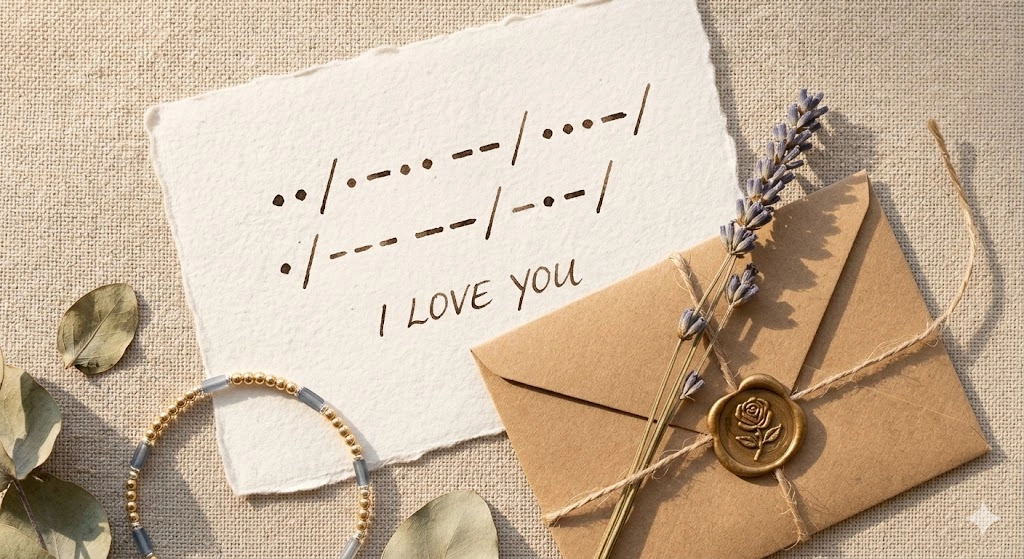
1. Handwritten notes and cards
Write the sequence directly on a card instead of the words. Add a small note at the bottom: “decode this.” It works for birthdays, anniversaries, or completely random Tuesdays when someone needs to know you are thinking about them.
2. Custom jewellery beyond bracelets
Rings with engraved dots and dashes on the inside. Necklace pendants shaped into the sequence. Cufflinks with the pattern stamped in. These work because the message is invisible to everyone except the person who knows what it means.
3. Wall art and home decor
Print the sequence on a canvas or have it laser-cut in wood. It looks like abstract minimalist art to most people. Only you know what it says. Frame it, hang it in a bedroom, and it becomes a permanent, quiet statement.
4. Digital messages
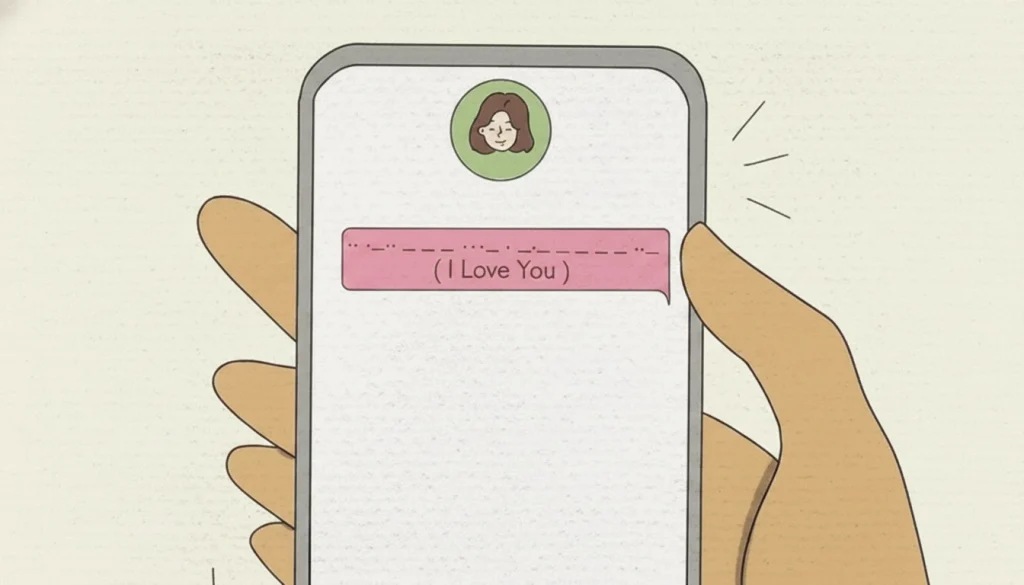
Send the sequence in a chat with no explanation. Just: ·· / ·−·· −−− ···− · / −·−− −−− ··−. Let them figure it out. Use our Morse Code Translator to generate the exact sequence and copy it directly.
5. Morse code in music or rhythm
If you or your partner plays an instrument, tap the pattern as a rhythm at the start of a song. Use long and short notes to represent dashes and dots. It is a detail most people will never notice, but the right person will.
How Do You Say "I Love You" in Morse Code With Sound or Light
Tapping is not the only option. Morse code was originally designed for electrical signals, which means it works just as well with sound or light.
Using a flashlight or phone torch:
- Short flash (1 unit on) = dot
- Long flash (3 units on) = dash
- Light off for 3 units between letters
- Light off for 7 units between words
Flash “I love you” from one window to another. It sounds like something out of a film, and it kind of is. This is exactly how ships communicated across open water before modern radio.
Using sound or humming:
- Short hum or tap = dot
- Long hum or tap = dash
- Same spacing rules apply
You can hum Morse code I love you under your breath at a dinner table, and nobody around you will realise what you are doing. Only the person across from you will.
More Romantic Phrases Worth Learning
Once you have I love you Morse code down, it is natural to want more. Here are a few phrases that work well for the same kinds of messages and gifts.
Phrase | Morse Code |
Forever | ··−· −·− ·−· · ···− · ·−· |
Always | ·− ·−·· ·−·· ·−·· ·−−· ··· |
My person | −− −·− / ·−··· · ·−· ··· −−− −· |
Kiss me | −·− ·· ··· ··· −− · |
Only you | −−− −·· ·−·· −·−· −·− −−− ··− |
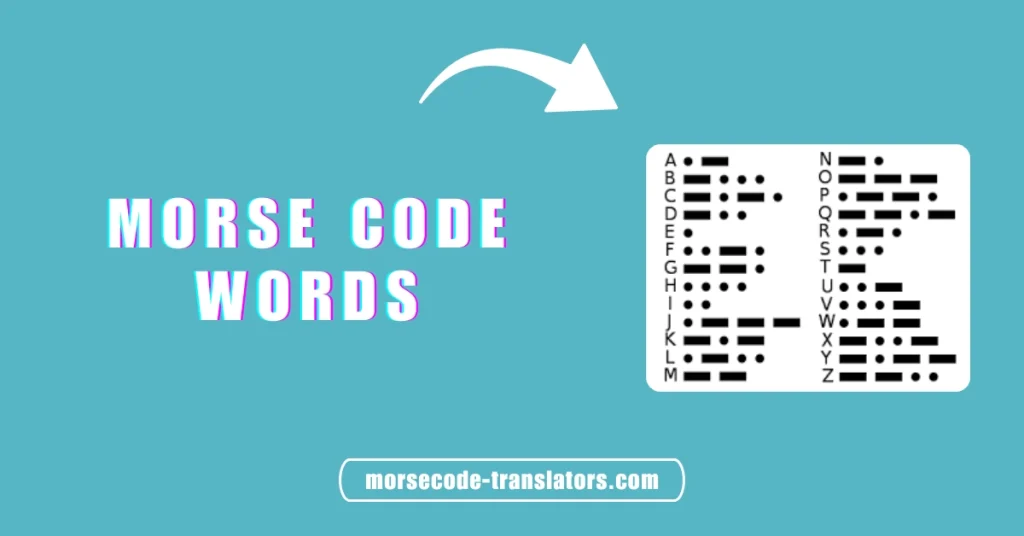
You can verify and generate any of these using the Morse Code Words section of this site, or run them through the translator directly.
And if you want to go in the opposite direction, the most universally recognised Morse code phrase in the world is SOS in Morse Code: · · · − − − · · · It is worth knowing that “I love you” in this language shares space with the phrase that has saved lives at sea. That is a meaningful contrast.
Understanding Morse Code Basics
You do not need to become a Morse code expert to use it for love messages. But understanding the basics helps you go beyond just copying symbols.
Morse code was standardised in the mid-1800s and has remained largely unchanged since then. Every letter, number, and common punctuation mark has a fixed code. The International Morse Code standard is what modern users follow, and it is the same system used in aviation and emergency communication today.
Letters are built from two signals only
dots (short) and dashes (long). There are no other components. Every letter in the alphabet is some combination of these two signals, from one symbol (E is just a single dot) to four or five symbols for less common letters.
Numbers follow a clean pattern
You can explore Morse Code Numbers separately, but the logic is satisfying: numbers 1 through 5 start with dots and add dashes, numbers 6 through 0 do the opposite. Once you see the pattern, you cannot unsee it.
Spacing is what makes it readable
Without correct spacing, dots and dashes blur into noise. The timing rules covered in the tapping section above apply to every method of transmission, not just finger tapping.
The alphabet is your foundation
If you want to go beyond single phrases, the Morse Code Alphabet chart gives you every letter mapped out. Most people can memorise the letters in their own name within one practice session.
Learning the full system is more approachable than most people expect. The How to Learn Morse Code guide on this site breaks the process down into short daily sessions that work for complete beginners.
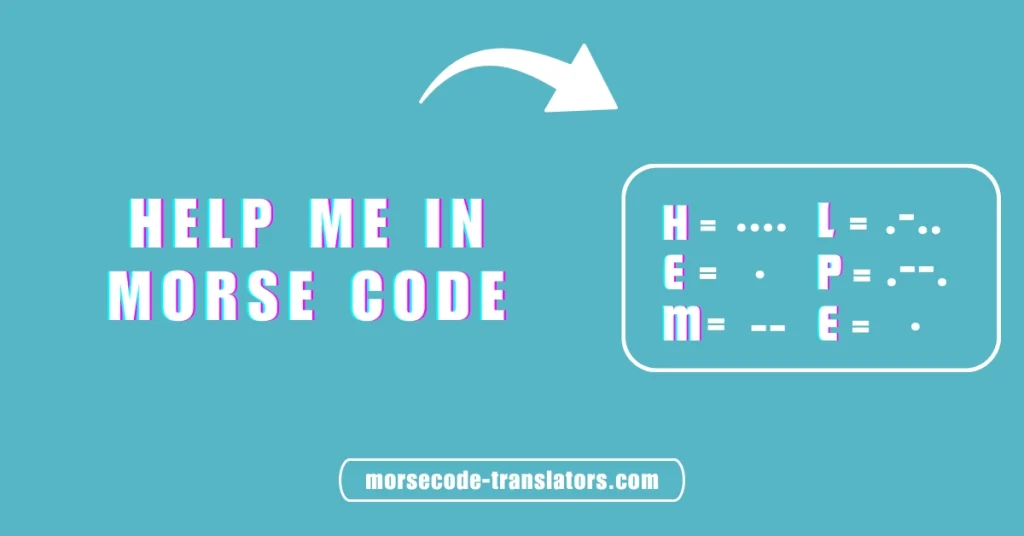
Also worth exploring: Help Me in Morse Code for when you want a phrase with a bit of humour behind it, and Morse Code Numbers for adding dates, coordinates, or anniversary years to custom messages.
Frequently Asked Questions
How to say "I love you" in Morse code?
The full translation is ·· / ·−·· −−− ···− · / −·−− −−− ··− where (/) represents the space between words. Each group represents one word: I, LOVE, YOU. You can write it, tap it, flash it with light, or encode it into a physical object like a bracelet or engraved jewellery.
How do I say "I love you" in a secret code?
Morse code is one of the most accessible secret codes available because no app or device is required to send it. You can tap it on someone’s hand, blink it, flash it with a light, write it on paper, or embed it in jewellery.
How to tap Morse code "I love you"?
Use one unit of time as your base (one second works well for beginners). For “I”: tap tap (pause 3). For “L”: tap, hold, tap, tap (pause 3). Continue through each letter at a steady, consistent pace. Practice on your own hand first before sending it to someone.
Is 143 the same as "I love you" in Morse code?
No, these are two different systems. 143 is a numeric shorthand where each number counts the letters in each word: I has 1 letter, love has 4, you has 3. It has nothing to do with Morse code patterns.
What does "I love you too" look like in Morse code?
Take the full “I love you” sequence and add: T = − / O = −−− / O = −−− at the end. The complete sequence becomes: ·· / ·−·· −−− ···− · / −·−− −−− ··− / − −−− −−−
Can I send Morse code without any equipment?
Yes. Your fingers, your eyes, your voice, and your breath are all you need. Tapping, blinking, humming, and breathing patterns can all carry Morse code accurately if the timing is consistent.