Help Me in Morse Code: Exact Translation, Blinking Steps, and Signal Guide
You searched for this because you want a real answer fast, and that makes complete sense. Maybe you are preparing for a survival situation, studying Morse code, or just genuinely curious about how you would call for help if voice communication were gone. Whatever your reason, this is the right place to start.
Most people only know SOS. But knowing how to send “help me” in Morse code gives you one more tool in a situation where tools run out quickly. You can blink it, tap it, flash it, or send it as a sound pattern. And once you learn it, you never forget it.
This guide covers the exact translation, a letter-by-letter breakdown, how to blink and flash “help me” using your eyes or a flashlight, how it compares to SOS, and how to practice it using our Morse Code Translator. By the time you finish reading, you will be able to send this phrase from memory. Emergency responders globally understand this sequence because it follows strict International Morse code guidelines.
What Is "Help Me" in Morse Code?
Let’s get the answer on the table right away.
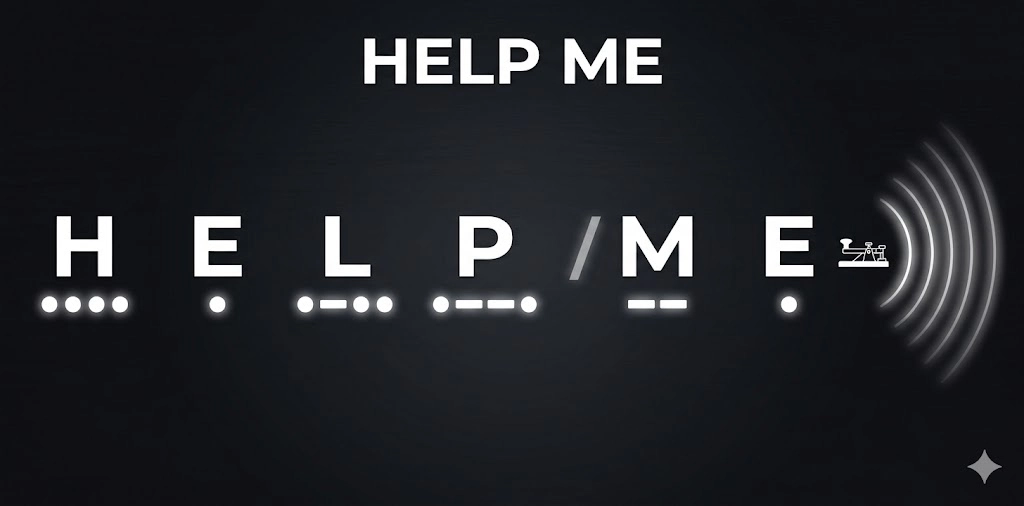
“Help Me” in Morse code is:
…. . .-.. .–. / — .
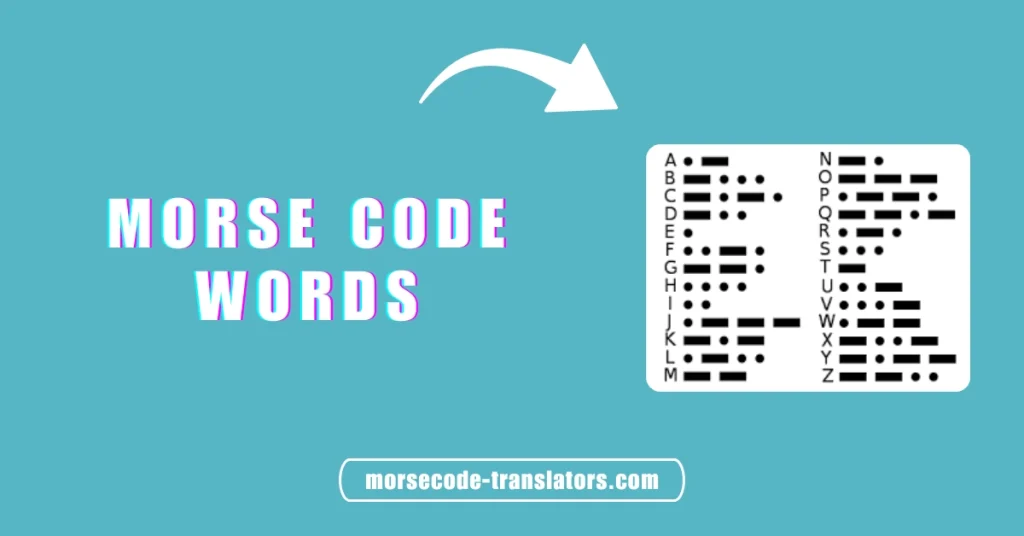
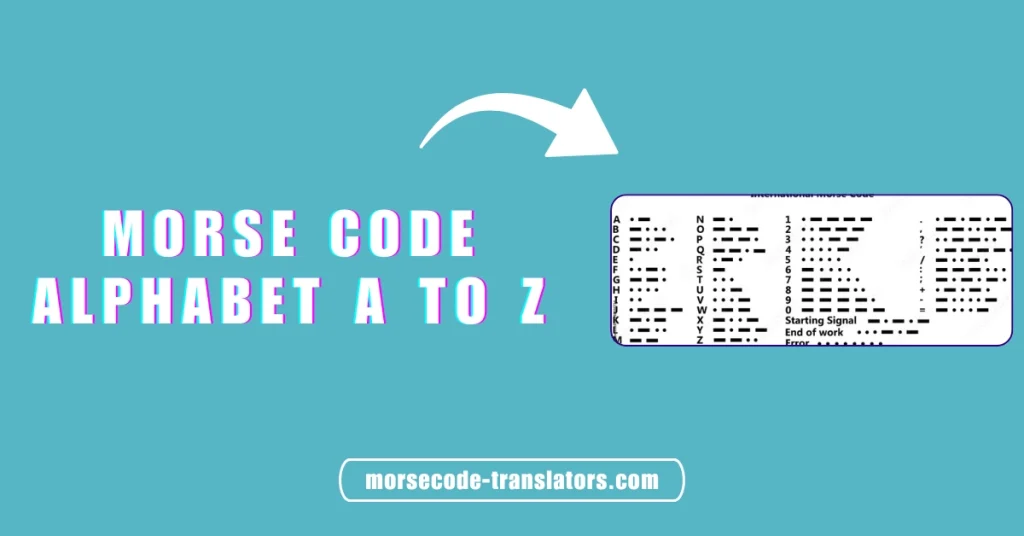
The slash in the middle marks the space between the two words. Every dot and dash maps to one specific letter in the Morse Code Alphabet. Here is the full breakdown:
Letter | Morse Code | How It Sounds |
H | …. | dit dit dit dit |
E | . | dit |
L | .-.. | dit dah dit dit |
P | .–. | dit dah dah dit |
(Word Space) | / | pause |
M | — | dah dah |
E | . | dit |
You can type “Help Me” directly into our Morse Code Translator and hit play. You will hear the exact audio with correct timing for every dot, dash, and pause, which makes it much easier to memorize by ear than by reading a chart.
How to Blink "Help Me" in Morse Code
This is probably the section that brought you here. Blinking Morse code is not a movie trick, it has real history behind it. During the Vietnam War, a prisoner of war named Jeremiah Denton blinked the word “TORTURE” in Morse code on live television while being forced to read a scripted statement. That blink sequence told the world the truth his captors tried to hide.
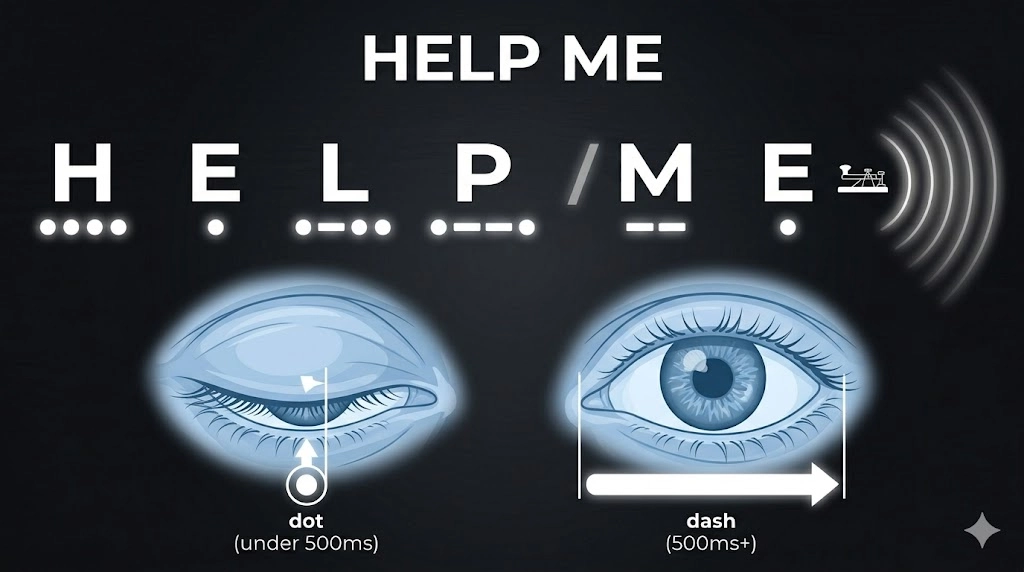
Blinking works because it uses the same timing rules as any other Morse signal. A short blink is a dot. A longer blink is a dash. Nothing changes except the medium.
Short Blink vs Long Blink
- Short blink (under 500 milliseconds) = dot ( · )
- Long blink (500 milliseconds or more) = dash ( — )
- Pause between blinks within one letter = one dot length
- Pause between letters = three dot lengths
- Pause between words = count silently to seven before the next letter
Blinking "Help Me" Step by Step
Practice this in a mirror before you ever need it in a real situation.
H:
- Four short blinks in quick succession
E:
- One short blink
L:
- Short blink, long blink, short blink, short blink
P:
- Short blink, long blink, long blink, short blink
(Word gap: pause for seven counts)
M:
- Two long blinks
E:
- One short blink
Go slowly the first few times. The goal is not speed, it is rhythm. Once the sequence feels natural in your blink muscles, you can gradually speed up. Most people lock in this particular phrase within two to three days of practising for ten minutes each day.
One more practical note: SOS is shorter and faster to blink than “Help Me.” If you are in real danger and every second matters, link directly to SOS in Morse Code to learn the universal distress signal first. Then come back and learn “Help Me” as your secondary phrase.
Other Situations Where Blinking Morse Code Has Been Used
Blinking is not just a wartime skill. It matters in modern medicine too. Patients with locked-in syndrome, a condition where the person is mentally aware but physically paralyzed, have used eye movements similar to Morse code to communicate with caregivers. It is one of the oldest accessibility tools in human history, and it still works.
Breaking Down Each Letter in "Help Me"
Understanding the phrase letter by letter is the fastest way to actually remember it. Each letter in “help me” has a distinct pattern, and a few of them have easy memory tricks attached.
The Word HELP in Morse Code
- H: ( …. ) Four dots. H is one of the most beginner-friendly letters in Morse code. Four quick dots, nothing else. The tricky part is not confusing it with S, which is three dots. Remember: H has one extra dot. If you picture the letter H having four legs (two on each side), the four dots make visual sense.
- E: ( . ) One dot. The single dot. E is the most common letter in the English language, so it makes sense that it gets the simplest code. One quick tap or blink, and you are done.
- L: ( .-.. ) Dot, dash, dot, dot. L takes a small rhythm shift. You start fast, hit one long signal, then finish fast again. A good way to remember it is the word “a-LOT-to-do”, say it out loud and match the emphasis. Short pause, strong beat, then two quick ones.
- P: ( .–. ) Dot, dash, dash, dot. P opens and closes with a dot, with two dashes sandwiched in the middle. Think of it as a symmetrical letter, which actually matches the way P looks if you count its symmetry. Start fast, hold twice, end fast.
The Word ME in Morse Code
- M: ( — ) Two dashes. M is one of the easiest letters in the code. Two strong, equal signals. Some people remember it by thinking of the two humps in the letter M. Two dashes, same length, small pause between them.
- E: ( . ) One dot again. Same as before, one quick signal to close out the phrase. The entire word “ME” is only three signals total. That makes it easy to fire off at the end of an otherwise demanding sequence.
Together, as Morse Code Words go, “Help Me” gives you a solid mix of simple letters and slightly more complex ones. Mastering this phrase puts a good chunk of the alphabet under your fingers.
How to Flash "Help Me" in Morse Code with a Flashlight
A flashlight is probably the most practical tool for sending “Help Me” in Morse code outside of a radio. It works at night, across open water, through windows, and even across significant distances if you point it correctly.
The rules are simple. A short flash is a dot. A long flash is a dash. Keep the 1:3 timing ratio, if your dot is one second, your dash should be three seconds. If that ratio collapses, the signal becomes unreadable.
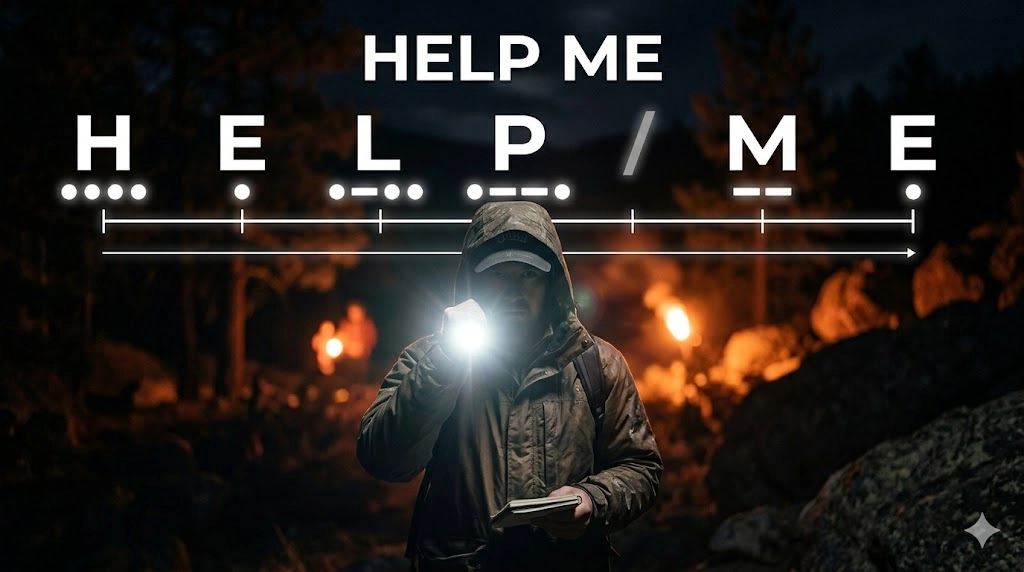
Flash Sequence for "Help Me"
Word 1: HELP:
- H: short, short, short, short (four 1-second flashes)
- Pause 3 seconds
- E: short (one 1-second flash)
- Pause 3 seconds
- L: short, long, short, short (1s, 3s, 1s, 1s)
- Pause 3 seconds
- P: short, long, long, short (1s, 3s, 3s, 1s)
- Pause 7 seconds (word gap)
Word 2: ME:
- M: long, long (two 3-second flashes)
- Pause 3 seconds
- E: short (one 1-second flash)
Light Sources That Work for Morse Code
You are not limited to a flashlight. Any light source you can turn on and off manually can carry this signal.
- Phone torch app: easiest and fastest
- Handheld mirror using reflected sunlight
- Vehicle headlights (for long-range daytime signalling)
- LED keychain light
- Laptop screen brightness toggling
The key factor is contrast. The brighter the flash against the background, the farther it carries. At night, even a small phone torch can be seen for miles over open water or flat terrain.
"Help Me Please" in Morse Code
Some situations call for a longer phrase. If you are signalling someone who can receive and decode a full message, not just a distress alert, “help me please” adds clarity and context.
“Help Me Please” in Morse code:
…. . .-.. .–. / — . / .–. .-.. . .- … .
Here is the full breakdown:
Letter | Morse Code |
H | …. |
E | . |
L | .-.. |
P | .–. |
(space) | / |
M | — |
E | . |
(space) | / |
P | .–. |
L | .-.. |
E | . |
A | .- |
S | … |
E | . |
That is 30 individual signals across 12 letters. In a real emergency, “Help Me” or SOS will always be the faster and smarter choice. But for practice, classroom exercises, or hobby use, “help me please” is a great phrase to build up to. You can check the full signal sequence using our Morse Code Translator to hear it played back at the correct speed.
How to Say "Help Me" in Morse Code Out Loud
Reading dots and dashes on paper is one thing. Actually sending the signal, whether through sound, tapping, or light, requires you to feel the rhythm, not just see it.
The spoken system uses two words: dit for a dot and dah for a dash. Here is the full spoken rhythm for “Help Me”:
dit-dit-dit-dit | dit | dit-dah-dit-dit | dit-dah-dah-dit — dah-dah | dit
Say that out loud a few times. You will notice the phrase has a fast, punchy opening and then slows into two deep beats at the end. That contrast actually makes it easier to recognise in an emergency.
Here is the timing structure that holds all of this together:
Signal Element | Duration |
Dot (dit) | 1 unit |
Dash (dah) | 3 units |
Gap within a letter | 1 unit |
Gap between letters | 3 units |
Gap between words | 7 units |
A “unit” is not a fixed time, it scales to whatever speed you are sending. The ratios are what matter. If your dashes are only slightly longer than your dots, the receiver cannot tell them apart. That single mistake scrambles the whole message.
Think of it this way: a dot is a finger snap. A dash is a hand clap. They sound and feel different. That difference in weight is exactly what makes Morse code decodable through any medium, including blinking.
How to Learn "Help Me" in Morse Code Fast
Learning this phrase is easier than most people expect. The mistake most beginners make is trying to memorise the chart visually. That approach is slow. Here are the methods that actually work.
The Tapping Method
Tap the pattern on a table before you try to flash or blink it.
- Short tap = dot
- Held tap (three times longer) = dash
Go through each letter 10 times, then connect the letters into the full phrase. Tapping builds muscle memory faster than looking at a chart. Your hands learn the rhythm before your brain fully catches up, and that is exactly what you want.
Sound Associations
Attach a word rhythm to each letter and say it out loud while you tap.
- H (····) — say “hip-po-po-tus” (four equal beats)
- L (·–··) — say “a-LOT-to-do” (short, strong, short, short)
- P (·––·) — say “pop-CORN-BALL-pop” (short, long, long, short)
- M (––) — say “MOON” drawn out slowly over two beats
These sound links are much stickier than raw dot-dash notation. Many experienced operators use some version of this even years into learning. You can explore more letter patterns in our full guide on How to Learn Morse Code.
Practice with the Translator Tool
The audio playback feature in our Morse Code Translator is the fastest way to connect what you read with what it actually sounds like.
- Type “Help Me” into the input box
- Press play and listen to the full sequence
- Mute the audio and try to replicate the rhythm by tapping
- Then turn audio back on and compare your timing
Do this three times in a row, once a day, for three days. Most beginners can send this phrase cleanly by day four.
Add Numbers to Your Practice
Once the phrase feels natural, extend your practice by adding coordinates or a time stamp using Morse Code Numbers. In a real survival scenario, sending your location along with a distress signal dramatically increases the chance of a successful rescue.
Mistakes That Distort the "Help Me" Signal
Most Morse code errors come down to two things: wrong timing and wrong letter count. Here are the ones that matter most for this phrase.
Confusing H with S
H is four dots. S is three dots. One missing dot turns “HELP” into something unreadable. Always count your dots out loud when practicing.
Letting dashes drift toward dot length
If you are tired or rushing, dashes start getting shorter. Once your dash is less than twice the length of your dot, the receiver cannot distinguish them. Keep the 1:3 ratio locked in.
Skipping the word gap
The seven-unit pause between HELP and ME is not optional. Without it, the two words blur together into a single unreadable sequence. Count it out every single time.
Practicing speed before accuracy
Speed comes from repetition, not from rushing. Sending “Help Me” fast and wrong helps no one. Slow it down until every element is clean, then gradually increase speed over days.
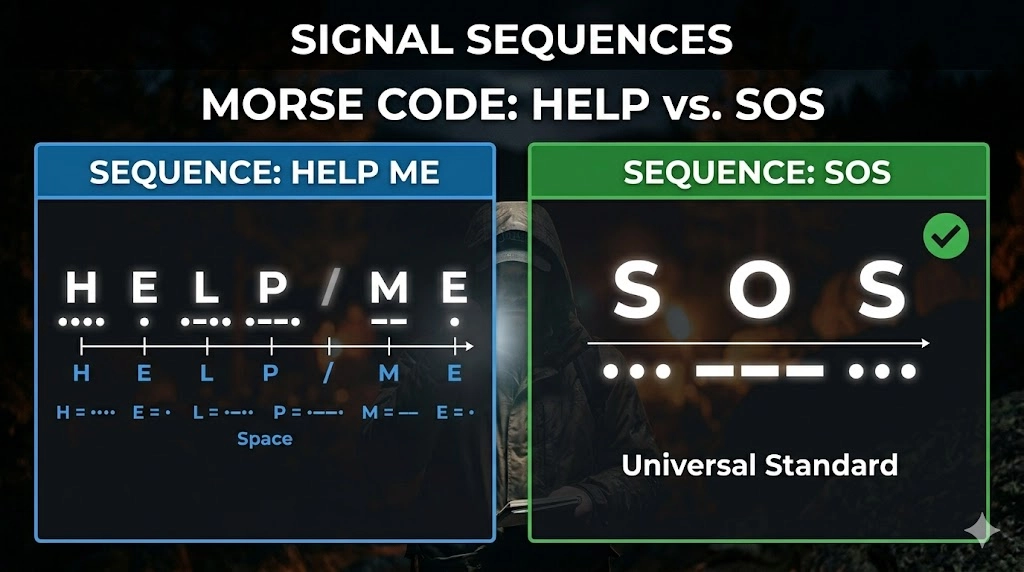
"Help Me" vs SOS: Which One Should You Send?
Both phrases are distress signals. But they are not the same thing, and knowing the difference could matter in a real situation.
Feature | Help Me | SOS |
Morse code | …. . .-.. .–. / — . | … — … |
Total signals | 14 | 9 |
Universally recognized | Partially | Yes — globally |
Easier to blink | No | Yes |
Word-based meaning | Yes | No (prosign only) |
Best use case | Specific request, hobby, communication | Any emergency |
SOS was never an abbreviation. It was chosen purely because the pattern, three dots, three dashes, three dots, is easy to send and impossible to confuse with anything else. It is transmitted as a single continuous signal with no gaps between the letters, which is what makes it stand apart.
“Help Me” is the better choice when you want to communicate a specific verbal phrase in practice sessions, creative projects, or non-emergency communication. In a real emergency, send SOS first, then follow it with “Help Me” if you have time and your receiver is listening closely.
For a full breakdown of the SOS signal, its history, and exactly how to send it, visit our dedicated page on SOS in Morse Code.
What Is "Help" in Morse Code?
Sometimes one word is enough. “Help” alone is shorter, faster to send, and still carries clear intent.
Morse code for “help”: …. . .-.. .–.
Letter | Morse Code |
H | …. |
E | . |
L | .-.. |
P | .–. |
Frequently Asked Questions
How do you say "help me" in Morse code?
“Help me” in Morse code is …. . .-.. .–. / — . You send it as H (four dots), E (one dot), L (dot-dash-dot-dot), P (dot-dash-dash-dot), a word space, M (two dashes), and E (one dot).
What is the Morse code of "help"?
“Help” alone in Morse code is …. . .-.. .–. — four letters: H (····), E (·), L (·–··), and P (·––·). It is 11 signals total and faster to send than the full “help me” phrase.
Is "help me" the same as SOS?
No. SOS (… — …) is a standardised distress signal, not a word or abbreviation. “Help me” is a verbal phrase. In a real emergency, send SOS first. It is shorter, universally recognised, and faster to transmit by any method.
How do you blink "help me" in Morse code?
Use short blinks for dots and longer blinks (about three times longer) for dashes. Blink H as four fast blinks, E as one fast blink, L as short-long-short-short, and P as short-long-long-short. Pause, then blink M as two long blinks and E as one short blink.
Can you flash "help me" with a phone flashlight?
Yes. A phone torch works well. Use a 1-second flash for dots and a 3-second flash for dashes. Keep the pauses between letters at 3 seconds, and the word pause at 7 seconds.
Where can I practice "help me" in Morse code for free?
You can use our Morse Code Translator to type any phrase, hear the correct audio playback, and watch the visual dot-dash output in real time. It is the fastest way to connect the written pattern with the actual sound, which is what makes it stick.